
Desperados 3 GDD
Core Loop
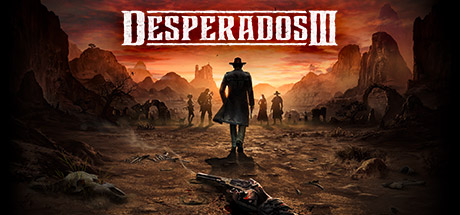
Desperados 3
- Status
- Released
- Year
- 2020
- Genre
- Strategy
- Platforms
- Windows, macOS, Linux
Desperados III loops around tactical stealth problem-solving: observe guarded mission spaces, plan a route or coordinated squad action, execute under real-time vision/noise/body rules, then either stabilize the result or quickload and refine. Each mission repeats this micro-loop across objectives on large handcrafted maps, while post-mission badges, replay maps, statistics, and alternate constraints turn completed missions into long-term mastery challenges.
Core Loop Summary
Desperados III is a real-time tactical stealth game built around repeated observation, planning, execution, feedback, and refinement. The player clears specific objectives on large guarded maps by reading patrol routes and vision cones, combining character-specific abilities, managing body/noise/alarm risk, and using Showdown Mode or quicksave/quickload to rehearse difficult timings.
flowchart TD
    A[Enter mission area or new objective] --> B[Observe patrols, vision cones, routes, bodies, civilians, and objective markers]
    B --> C[Choose approach: bypass, distract, knock out, kill, accident, disguise, or synchronized squad action]
    C --> D[Prepare position, resources, and optional quicksave]
    D --> E[Execute in real time or through Showdown Mode]
    E --> F{Outcome readable?}
    F -->|Clean or recoverable| G[Hide bodies, reposition, update objective, advance to next encounter]
    F -->|Detected, alarmed, resource-wasted, badge failed, or character lost| H[Quickload/manual load or improvise recovery]
    H --> B
    G --> I{Mission complete?}
    I -->|No| B
    I -->|Yes| J[Review badges, replay map, statistics, and mission-select replay goals]
    J --> K[Replay for mastery, speed, constraints, or missed badges]
    K --> A
Moment-to-Moment Decision Cycle
| Step | Player Question | Primary Inputs | Feedback / Consequence |
|---|---|---|---|
| Observe | What is watched, heard, blocked, or safe? | Camera view, patrol timing, enemy cones, view-cone markers, objective prompts, character positions | Green/yellow/red detection states, visible patrol coverage, body/noise risk, route readability |
| Plan | Which character or tool solves this obstacle with least risk? | Squad abilities, movement traits, Showdown queue, resources, terrain, disguises, lures, traps, firearms | Valid/invalid targets, range and line-of-sight limits, queued markers, noise or alarm risk |
| Commit | Can the plan execute before witnesses react? | Real-time input, Showdown Execute, per-character activation, stance and travel time | Successful bypass/takedown, suspicious investigation, alarm escalation, reinforcements, injury, death, or mission failure |
| Stabilize | What must be cleaned up before moving on? | Body carry/hide/tie options, patrol reset, healing, repositioning, objective update | Area becomes safer, new route opens, resources are reduced, or hidden risk remains for later patrols |
| Iterate | Is the current state worth keeping? | Quicksave, quickload, manual save/load, mission restart | Player preserves a clean setup, reloads a failed attempt, or continues with consequences |
Mission / Session Loop
- Load into a mission with one or more current objectives and an available squad composition.
- Scout the map section-by-section instead of rushing direct combat; the experience is slow, meticulous, and stealth-focused rather than a western run-and-gun loop.
- Use character kits to create local solutions: distractions, silent or ranged takedowns, non-lethal control, body handling, disguises, environmental accidents, healing, traps, and other squad-specific tools.
- Coordinate timing-sensitive encounters with Showdown Mode when several enemies, witnesses, or patrol windows must be handled together.
- Resolve the immediate encounter, then clean the state by hiding or controlling bodies, waiting for investigations to end, healing, conserving resources, and moving the squad forward.
- Repeat until all primary objectives are complete and the mission ends.
Failure, Retry, and Learning
Failure is not only a hard fail screen. The loop treats detection, alarm escalation, reinforcements, character death, wasted limited resources, failed badge constraints, poor timing, or a bad save position as learning signals. Quicksave and quickload are first-class tactical tools: the player saves before a risky setup, tests the plan, reads why it failed, then reloads and changes timing, route, ability order, stance, or target priority.
Important retry rules:
| Retry Trigger | Typical Player Response | Design Meaning |
|---|---|---|
| Enemy sees a character or suspicious action | Break line of sight, neutralize witness, or quickload | Detection teaches cone coverage, timing, and stance risk |
| Body is discovered | Hide/tie/move bodies earlier or alter takedown location | Cleanup is part of the loop, not optional decoration |
| Noise draws investigation or alarm | Use quieter tools, lure listeners away, or change execution order | Loud actions are powerful but create map-wide consequences |
| Showdown plan lands out of sync | Adjust posture, distance, activation timing, or target order | Planning is tactical rehearsal, not guaranteed safety |
| Badge or speed constraint is broken | Continue for mission completion or restart/replay for mastery | Optional goals reshape the same mission into new optimization puzzles |
| Quicksave captures a bad state | Load an older manual/recent save if available | Save management is part of high-level player judgment |
Long-Term Mastery Loop
After mission completion, the game extends the loop through post-mission challenge feedback:
| Layer | Reward / Feedback | How It Feeds Replay |
|---|---|---|
| Badges | Mission-specific optional goals such as no firearms, no saves, speedrun times, kill-method constraints, stealth goals, difficulty goals, and simultaneous eliminations | Encourages alternate routes and constraint-driven replays |
| Replay viewer | Overhead path and kill/action visualization with timeline controls | Lets players review route efficiency, mistakes, and encounter timing |
| Statistics | Completion time, save/load count, alarms, kills, injuries, civilian kills, bodies discovered, and per-character contribution | Converts a completed run into measurable performance goals |
| Mission select | Previously completed missions can be replayed | Supports completionism, challenge runs, and route optimization |