
Desperados 3 GDD
Overview
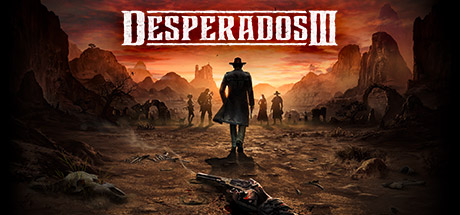
Desperados 3
- Status
- Released
- Year
- 2020
- Genre
- Strategy
- Platforms
- Windows, macOS, Linux
Desperados III is a real-time tactical stealth game set in a stylized 1870s Wild West, played from an isometric command perspective where the player directs a specialist outlaw squad through large handcrafted missions. The core promise is to outthink guarded spaces rather than outshoot them: scout patrols and vision cones, combine distinct character abilities, coordinate timing through Showdown Mode, recover through quicksave/quickload iteration, and replay missions for badges, statistics, and cleaner mastery routes.
Playable Promise
Desperados III is a real-time tactical stealth game about commanding a small crew of outlaw specialists through hostile frontier missions. The fantasy is not a guns-blazing western power trip; it is the satisfaction of reading a dangerous space, finding a clever opening, and executing a plan cleanly enough that guards never fully understand what happened.
The player observes patrols from an isometric tactical camera, studies vision cones and sound/body risks, then uses character-specific tools to bypass, distract, neutralize, hide, or manipulate enemies. Missions are large, authored stealth sandboxes with objectives embedded in towns, ranches, swamps, deserts, snowy areas, and other western locations. Success comes from patient reconnaissance, precise timing, systemic improvisation, and repeated refinement.
Genre and Perspective
| Axis | Design Target |
|---|---|
| Genre | Real-time tactics / stealth tactics with puzzle-like encounter solving. |
| Camera and control | Isometric mission view with direct squad selection, character swapping, action bars, spatial markers, minimap support, and Showdown planning. |
| Player role | Tactical commander of a five-character outlaw squad rather than a single action hero. |
| Primary challenge | Complete mission objectives while managing line of sight, enemy routines, sound, bodies, limited tools, character constraints, and alarm escalation. |
| Core rhythm | Observe, plan, execute, clean up, quicksave/quickload or adapt, then advance to the next objective space. |
| Progression feel | Campaign advancement plus player mastery through badges, replay viewer analysis, statistics, difficulty goals, and alternate challenge routes. |
Target Experience
The intended experience is deliberate, readable, and experimental. Players should feel that each guarded area is a tactical problem with multiple valid solutions rather than a scripted lock-and-key puzzle. A strong encounter lets the player ask: Who is watching? What noise will this create? Which character can solve this safely? What happens to the body? Can the plan be synchronized? Is this state worth saving?
Failure is expected to teach rather than only punish. Detection, alarms, bad timing, wasted resources, failed badge constraints, or a messy body state should give the player information for the next attempt. Quicksave and quickload support this trial-and-error rhythm, while Showdown Mode supports the fantasy of staging simultaneous western ambushes without removing systemic consequences.
Supported Design Pillars
| Pillar | Player-Facing Promise | Supporting Systems |
|---|---|---|
| Tactical stealth over open combat | The player wins by scouting, isolating, bypassing, distracting, and controlling risk rather than relying on reflex shooting. | Core mission loop, enemy vision cones, body discovery, sound risk, alarms, and reinforcement consequences. |
| Specialist squad problem solving | Every playable character should change the tactical vocabulary available to the player. | Cooper, McCoy, Hector, Kate, and Isabelle have distinct movement access, tools, takedowns, disguises/control options, body handling, and resource limits. |
| Systemic readable spaces | Missions should be learnable through visible patrols, cones, markers, objectives, HUD feedback, and consistent enemy reactions. | Vision-cone states, view-cone markers, minimap/action bar support, spatial prompts, investigation states, and post-failure recovery screens. |
| Planned synchronization | Complex encounters should support queued, coordinated action without becoming automatic or consequence-free. | Showdown Mode allows queued commands and Execute/staggered activation while normal line-of-sight, noise, timing, and alarm rules still apply. |
| Iteration and mastery | The game should reward experimentation during a first clear and route optimization after completion. | Quicksave/quickload loop, mission badges, speed/no-save/no-firearm constraints, replay viewer, statistics, and mission replay goals. |
| Frontier stealth fantasy | Western locations, outlaw characters, environmental hazards, disguises, traps, and ambushes should sell a stylized 1870s revenge-adventure tone. | 1870s Wild West prequel framing, John Cooper and allies, and varied frontier settings. |
High-Level Scope
Desperados III should be understood as a campaign of handcrafted stealth missions, not a systemic open world or economy-driven RPG. The documented design does not support shops, XP leveling, permanent stat upgrades, or broad loot progression. Instead, depth comes from encounter density, character tool combinations, enemy archetype variation, optional constraints, and replay analysis.
Feature detail belongs in the dedicated sections:
| Area | Covered Elsewhere |
|---|---|
| Mission rhythm, retry, and replay flow | core_loop |
| Character verbs, controls, traversal, takedowns, Showdown, and save iteration | player_mechanics |
| Relative character/enemy/item stats and tuning | entity_stats |
| Tactical resources, badge rewards, achievements, and progression gates | economy |
| Enemy states, perception, investigation, alarms, civilians, dogs, and archetype counters | ai_behavior |
| HUD, menus, action bars, minimap, prompts, and post-mission screens | ui_hud |