
Shadow Tactics: Blades of the Shogun GDD
Overview
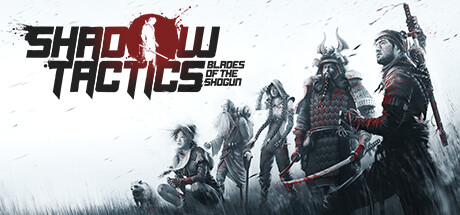
Shadow Tactics: Blades of the Shogun
- Status
- Released
- Year
- 2016
- Genre
- Indie, Strategy
- Platforms
- Windows, macOS, Linux
Shadow Tactics: Blades of the Shogun is a top-down/isometric real-time stealth tactics game set in Edo-period Japan, where the player commands a small squad of five specialized infiltrators through handcrafted missions built around observation, planning, synchronized execution, and quick iteration. The playable promise is to feel like a disciplined ninja tactician: read patrols and vision cones, combine asymmetric character abilities, exploit terrain and timing, hide the evidence, and solve each guarded space like a lethal stealth puzzle.
Game Summary
Shadow Tactics: Blades of the Shogun is a stealth-oriented real-time tactics game set in stylized Edo-period Japan. The player commands a small squad of infiltrators across discrete, handcrafted missions, using stealth, timing, environmental reading, and synchronized character abilities to complete objectives such as assassination, infiltration, rescue, theft, eavesdropping, kidnapping, escort, and sabotage.
The core fantasy is not direct combat dominance. The player is a patient tactical planner: observing enemy patrols, evaluating vision cones and noise risks, choosing the right specialist for each obstacle, executing a coordinated plan, and then hiding the evidence before the level reacts.
Playable Promise
The game promises a mentally stimulating stealth puzzle where every guarded area can be read, broken down, and solved through careful planning. Success should feel like a controlled chain reaction: the player identifies a weakness in a patrol network, positions the right characters, executes with precision, and watches a seemingly impossible space collapse into a clean route forward.
| Promise | Player Experience |
|---|---|
| Tactical stealth over reflex combat | The player wins by observation, timing, positioning, and tool choice rather than by fighting through guards. |
| Specialist squad fantasy | Each of the five heroes has a distinct tactical niche, so solutions emerge from combining complementary abilities. |
| Readable systemic challenge | Vision cones, patrol routes, noise, bodies, enemy types, snow, darkness, and torchlight form legible stealth problems. |
| Coordinated execution | Shadow Mode lets the player queue and trigger simultaneous actions, enabling plans that one character could not perform alone. |
| Iterative mastery | Quicksave/quickload and mission replay turn failure into experimentation, while badges and constraints reward deeper mastery. |
Design Pillars
1. Stealth As Spatial Logic
Levels function as large, interconnected stealth puzzles. Guards, patrols, sightlines, vertical terrain, concealment spots, bodies, and environmental hazards create a network of cause and effect. The player is expected to inspect the whole space, not just the next guard, and solve it piece by piece.
2. Complementary Specialists
The playable cast is defined by asymmetry. No single character solves every tactical domain. The roster covers infiltration, lure/trap play, crowd control, social infiltration, and long-range support. Mission-specific squad composition changes which combinations are available, keeping the same stealth rules fresh across different scenarios.
3. Plan, Synchronize, Execute
The experience is real-time, but the strongest moments come from deliberate coordination. Shadow Mode supports multi-character plans by letting the player stage actions and execute them together, especially against mutually watching guards or patrol clusters where sequential play would cause detection.
4. Evidence And Consequence
Stealth actions leave consequences. Bodies can be discovered, noise can pull guards away from routes, snow can reveal movement history, darkness and torchlight reshape visibility, and alarms can escalate the mission state. The player must plan not only the takedown but also the aftermath.
5. Failure As Experimentation
The game is difficult and sometimes punishing, but its frictionless quicksave/quickload loop supports experimentation. Players are encouraged to test plans, learn from failure, and refine routes. Optional badges and replay goals then convert solved missions into mastery challenges.
Target Experience
The intended emotional arc is tension followed by tactical satisfaction:
- The player enters a dense guarded area that appears impossible.
- They study patrols, vision cones, enemy types, terrain, and objective requirements.
- They identify a weakness or invent a multi-character setup.
- They execute a precise plan, often with simultaneous actions.
- They clean up bodies or traces, then move deeper into the mission.
- If the plan fails, they reload, adapt, and try a sharper version.
This creates the fantasy of being a disciplined covert operator rather than an action hero: unseen, prepared, and always one step ahead when the plan works.
High-Level Scope Boundaries
This overview intentionally stays at the experience level. Detailed implementation rules belong in the dedicated sections:
| Topic | Primary Section |
|---|---|
| Moment-to-moment, mission, and replay loops | Core Loop |
| Movement, abilities, Shadow Mode, bodies, and player verbs | Player Mechanics |
| Character, enemy, weapon, and object parameters | Entity Stats |
| Ammo, reusable tools, badges, and scarcity model | Economy |
| Guard perception, investigation, alarms, civilians, and enemy archetypes | AI Behavior |
| Vision cones, command UI, prompts, save timer, and feedback elements | UI/HUD |