
Environmental Interaction System
Base
Shadow Tactics: Blades of the Shogun
- Status
- Released
- Year
- 2016
- Genre
- Indie, Strategy
- Platforms
- Windows, macOS, Linux
1. Summary
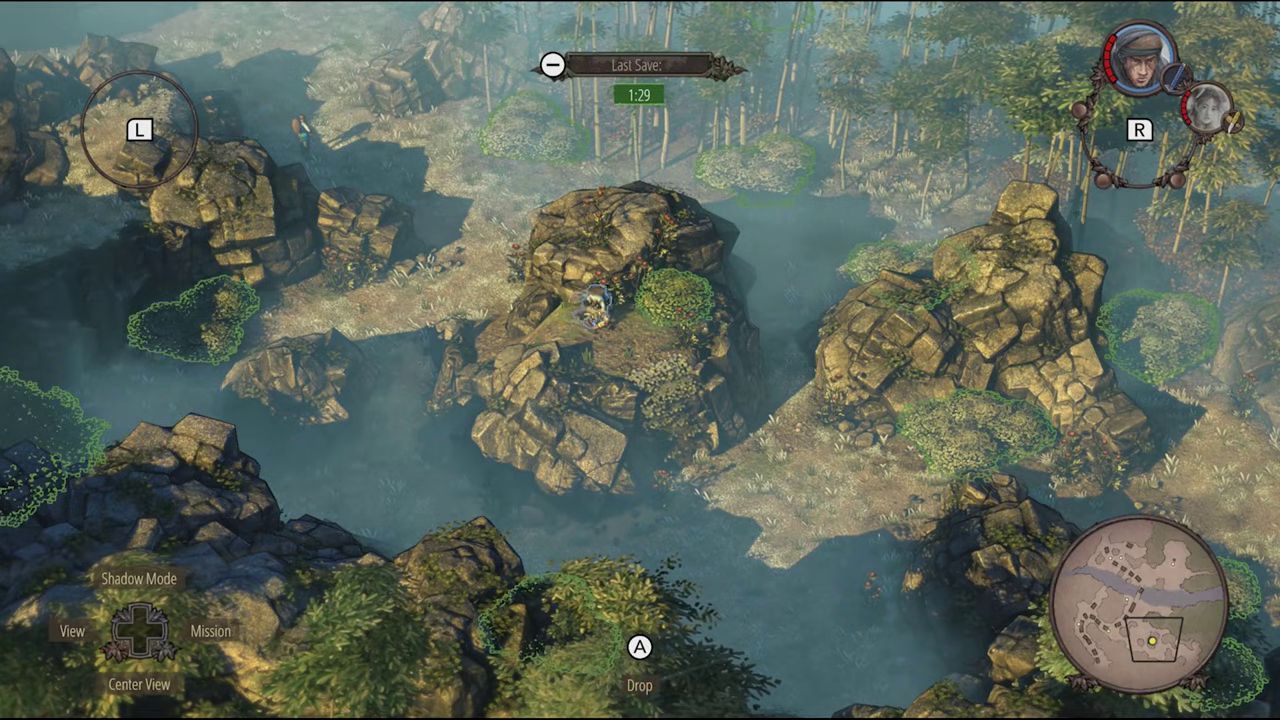
An environmental layer system that defines terrain affordances, concealment, weather effects, and interactive objects across mission levels. It governs how bushes, hedges, and building interiors hide characters and bodies; how snow leaves temporary footprints that enemies follow; how water, vines, ladders, and grappling hooks enable or block traversal by movement archetype; how darkness, torchlight, and rain alter visibility and noise; and how interactive objects (barrels, rocks, icicles, carts, cranks, cloth barriers) can be manipulated to create accidents, open paths, or dispose of bodies permanently in wells or deep water.
3. Design Intent / Job Story
When planning a stealth approach through a guarded area, I want to use the environment to conceal my team, manipulate enemy patrols, and create accidents, so that I can complete objectives without raising alarms.
4. Role in Gameplay Loop
- Provides the spatial and environmental foundation for all stealth tactics in every mission
- Creates tactical opportunities through verticality (rooftops, vines, ladders), concealment (bushes, hedges, interiors), and destructible or movable objects
- Gates character capabilities based on movement archetype (agile vs heavy) through terrain affordances
- Supports the Mission Badge System with environmental constraints ("Don't enter the water", "Don't step on loud surfaces", "Extinguish all torches")
- Enables creative problem-solving by allowing players to lure enemies with footprints, drop objects from above, or hide bodies in permanent removal zones
5. Preconditions
- Mission level has loaded with environmental affordances (concealment spots, climb surfaces, water, interactive objects) placed by level design
- Weather and lighting conditions (day/night, snow, rain, torch presence) are configured per level
- At least one player-controlled character is alive and present in the mission
- Character movement archetype matches the environmental affordance they attempt to use
6. Parameters
| Parameter | Value | Type | Notes |
|---|---|---|---|
| Footprint fade duration | TBD | duration | Time before snow footprints disappear from the ground |
| Darkness vision reduction | TBD | multiplier | Percentage reduction applied to enemy vision range in unlit areas |
| Torch light radius | TBD | distance | Range around a torch or fire where enemy vision is restored to full |
| Rain vision reduction | TBD | multiplier | Percentage reduction applied to enemy and player vision during rain |
| Loud surface noise multiplier | TBD | multiplier | Noise amplification factor for running on loud surfaces such as puddles |
| Swim speed modifier | TBD | multiplier | Movement speed reduction while swimming compared to walking |
| Vine climb speed | TBD | duration | Time required to ascend or descend a vine |
| Ladder climb speed | TBD | duration | Time required to ascend or descend a ladder |
| Heavy object throw range | TBD | distance | Maximum horizontal and vertical distance a heavy character can throw an object |
| Drop trap trigger range | TBD | distance | Maximum horizontal and vertical offset for valid drop-trap targets below |
| Permanent removal depth | TBD | distance | Minimum depth for water or well to qualify as a permanent body removal zone |
| Cart hiding capacity | TBD | integer | Maximum number of characters that can hide inside a single cart |
| Disguise acquisition time | TBD | duration | Time required to interact with clothing and acquire a disguise |
7. Core Rules
- Concealment Spots: Bushes, hedges, and building interiors function as concealment spots. Characters inside are hidden from enemy vision cones. Bodies placed inside concealment spots are hidden from enemy discovery.
- Snow Footprints: Moving across snow-covered terrain leaves temporary visible footprints. Enemies who spot footprints will follow the trail to its endpoint and enter investigation. Footprints fade automatically after a short duration.
- Water and Swimming: Water bodies can be swum through by agile archetype characters. Entering water breaks disguises. Standing water produces splash noise when characters run through it. Bodies dumped in deep water are permanently removed.
- Verticality — Vines and Ladders: Vines can be climbed by agile archetype characters. Ladders can be climbed by all characters. Rooftops and elevated positions enable death-from-above attacks and allow bypassing ground patrols.
- Grappling Hooks and Rope Ladders: Hook-rings in the environment allow agile characters to ascend to rooftops or cross gaps. Rope ladders can be lowered by agile characters to allow heavy archetypes to follow.
- Light and Darkness: Darkness reduces enemy vision range. Torches and fires create localized bright zones that restore full vision within their radius. Torches can be extinguished by characters; guards may leave their post to relight them.
- Weather — Rain: Rain reduces enemy vision range and limits player sight distance. Footsteps on wet or muddy ground produce more noise than on dry terrain.
- Interactive Objects — Heavy Objects: Explosive barrels, rocks, and heavy stones can be carried by heavy archetypes and thrown horizontally or vertically to crush enemies or create explosions. Nearby guards treat these as accidents.
- Interactive Objects — Drop Traps: Icicles, hanging crates, rocks, and vases positioned above enemies can be dropped onto targets below, killing them as accidents that do not trigger alarms.
- Interactive Objects — Mechanisms: Cranks can drop wood stacks, open gates, or move cages. Scaffolding can be knocked over to flush out or kill enemies.
- Wagons and Carts: Characters can hide inside stationary carts. Carts and wagons block enemy line of sight. Moving wagons provide mobile cover and can transport characters across areas.
- Doors: Doors can be opened and closed. Characters can hide behind closed doors. Doors block enemy vision when closed.
- Cloth Barriers: Fabric fences and cloth walls can be cut open by any character to create new traversal paths.
- Permanent Removal Zones: Wells, deep water, and cliffs permanently remove bodies from play when bodies are thrown into them, preventing any future discovery.
- Loud Surfaces: Certain surfaces (puddles, specific floor types) produce amplified footstep noise when characters run across them.
- Disguise Sources: Clothing and laundry placed in the environment can be interacted with to acquire disguises. Acquisition is character-specific and may require eliminating or knocking out nearby civilians first.
8. BDD Scenarios
Scenario: Hiding in a bush to avoid detection
- Given
- an enemy patrol is approaching a character
- When
- the player moves their character into a bush concealment spot
- Then
- the character becomes concealed and the enemy vision cone no longer builds detection
Scenario: Using snow footprints to lure a guard into an ambush
- Given
- the mission takes place on snow-covered terrain
- When
- the player walks across the snow to create a trail leading to an ambush spot and hides in a bush
- Then
- a guard who spots the footprints follows the trail to the endpoint and can be ambushed
Scenario: Extinguishing a torch to create a corridor of darkness
- Given
- a guard is patrolling near a lit torch in a dark area
- When
- the player extinguishes the torch
- Then
- the guard's vision range is reduced in the surrounding area, creating a safe passage
Scenario: Dropping an icicle on an enemy as an accident
- Given
- an enemy is standing below a hanging icicle
- When
- the player shoots or interacts with the icicle anchor
- Then
- the icicle falls and kills the enemy, and nearby guards treat it as an accident
Scenario: Swimming across a river to bypass ground patrols
- Given
- a river blocks the path and the active character has the agile movement archetype
- When
- the player enters the water and swims to the opposite bank
- Then
- the character bypasses ground patrols, but any active disguise is removed on entering the water
Scenario: Hiding a body in a well for permanent disposal
- Given
- a character has eliminated an enemy and a well is nearby
- When
- the character carries the body to the well and throws it in
- Then
- the body is permanently removed from play and cannot be discovered
Scenario: Cutting a cloth barrier to open a new path
- Given
- a cloth fence blocks the path forward
- When
- the player orders a character to cut the cloth
- Then
- a new traversal path opens and the character can pass through
Scenario: Lowering a rope ladder for a heavy teammate
- Given
- an agile character is on a rooftop with a rope ladder point
- When
- the agile character lowers the rope ladder
- Then
- a heavy archetype teammate can climb up to the rooftop
9. Edge Cases
- A character enters a bush while already inside an enemy's vision cone; detection buildup pauses but does not reset until line of sight is fully broken
- Snow footprints from multiple characters cross; enemies follow the most recent or most visible trail, potentially leading to an empty ambush spot
- A guard relights a torch that was extinguished, restoring vision range in that area and potentially spotting a character who relied on the darkness
- A heavy archetype is ordered to a destination reachable only by swimming; pathfinding must reroute or the command must fail gracefully
- A body thrown into a well or off a cliff is permanently removed and cannot be retrieved, even if the player later needs to move it
- A character starts climbing a vine just as a guard turns toward them; the climbing animation may expose them if the vine is in the guard's vision cone
- Rain and darkness weather effects may stack, resulting in significantly reduced enemy vision range
- An interactive object (barrel, rock) thrown by a heavy character may land in an unreachable location, preventing retrieval and potentially blocking the object for the mission
- A cart that the player is hiding inside begins moving; the character remains hidden but may be transported to an unexpected location
- A door used for hiding is opened by a patrolling guard, exposing any character hiding behind it
- Disguise clothing can only be acquired from specific environmental points; if the civilian guarding the clothes is not eliminated or knocked out first, acquiring the disguise may trigger detection
- A trap placed inside a bush automatically conceals the victim, but if the bush is already occupied by another body, visual clipping or discovery may occur
- Standing in a puddle while running produces amplified noise that can alert guards outside the normal footstep radius
- A rope ladder lowered for a heavy character may be retracted if the agile character moves away, stranding the heavy character
- Environmental drop traps (icicles, rocks) require precise positioning; if the target moves before the drop completes, the object may miss and alert guards with its impact noise
10. QA Notes
- Verify all concealment spot types (bush, hedge, building interior, behind door) properly hide characters and bodies from enemy vision
- Verify snow footprints spawn behind moving characters on snow terrain and fade after the correct duration
- Verify enemies follow footprint trails accurately to their endpoint and enter investigation state
- Verify swimming is only available to agile archetypes and breaks disguise immediately on water entry
- Verify standing water splash noise alerts nearby enemies when characters run through it
- Verify torch extinguishing reduces vision range in the surrounding area and that guards attempt to relight them
- Verify rain reduces both enemy and player vision distances and increases footstep noise on wet ground
- Verify heavy objects (barrels, rocks) can be carried and thrown only by heavy archetypes
- Verify drop traps (icicles, hanging crates, rocks, vases) kill targets below and are treated as accidents by AI
- Verify permanent removal zones (wells, deep water, cliffs) remove bodies from play and prevent discovery
- Verify rope ladders can be lowered by agile characters and used by heavy characters to reach elevated areas
- Verify cloth barriers can be cut by any character to create new traversal paths
- Verify carts and wagons block line of sight and allow characters to hide inside them
- Verify doors block enemy vision when closed and can be used as hiding spots
- Verify loud surfaces (puddles, specific floors) amplify footstep noise correctly
- Verify disguise clothing can only be acquired from designated environmental points
- Verify cranks and mechanisms function correctly (drop wood stacks, open gates, move cages)
- Verify scaffolding can be knocked over and affects enemies below as an accident
11. Mechanic Dependencies
- Stealth Detection System (environmental conditions (darkness, snow footprints, torchlight, rain) directly modify the parameters of the Stealth Detection System's vision cones and noise evaluation)
- Stealth Elimination Mechanics (environmental eliminations (falling objects, poisoned items, animal kicks, heavy object throws) depend on interactive objects placed by this system; trap placement in concealment spots auto-hides victims)
- Body Manipulation Mechanics (concealment spots (bushes, hedges, wells, doors, water) and permanent removal zones (wells, cliffs, deep water) are environmental features that the Body Manipulation system uses to hide or dispose of bodies)
- Character Movement System (traversal options (vine climbing, swimming, rooftop jumping, grappling hook use, ladder climbing) are gated by environmental affordances defined in this system)
12. UI Links
- Enemy Vision Cones - The Environmental Interaction System dynamically modifies vision cone properties: darkness shrinks cones, torchlight extends them, rain reduces vision range, and bushes/concealment spots hide characters within active cones. Environmental occlusion (walls, fences, rocks) clips cone geometry in real-time.
References
- 1.
The Art of Shadow Tactics Blades of the Shogun and STRATEGY GUIDE (L600-4200 of 4930)
- 2.
Shadow Tactics: Blades of the Shogun Review – Is This the Best Version Yet? (7:20-7:40)