![Visual reference from Desperados 3 Let's Play Gameplay Walkthrough Pt 6 Closing In On New Orleans [1440p w/ Commentary] at 44:10-45:05](/published/media/desperados-3/source-329-preview-0b574900f8.jpg)
![Visual reference from Desperados 3 Let's Play Gameplay Walkthrough Pt 6 Closing In On New Orleans [1440p w/ Commentary] at 46:57-47:05](/published/media/desperados-3/source-329-preview-422cf9c161.jpg)
![Visual reference from Desperados 3 Let's Play Gameplay Walkthrough Pt 9 Queen's Nest [1440p w/ Commentary] at 43:05-43:50](/published/media/desperados-3/source-332-preview-e0ba75a8ff.jpg)

Distraction and Noise Manipulation
Base
Desperados 3
- Status
- Released
- Year
- 2020
- Genre
- Strategy
- Platforms
- Windows, macOS, Linux
1. Summary
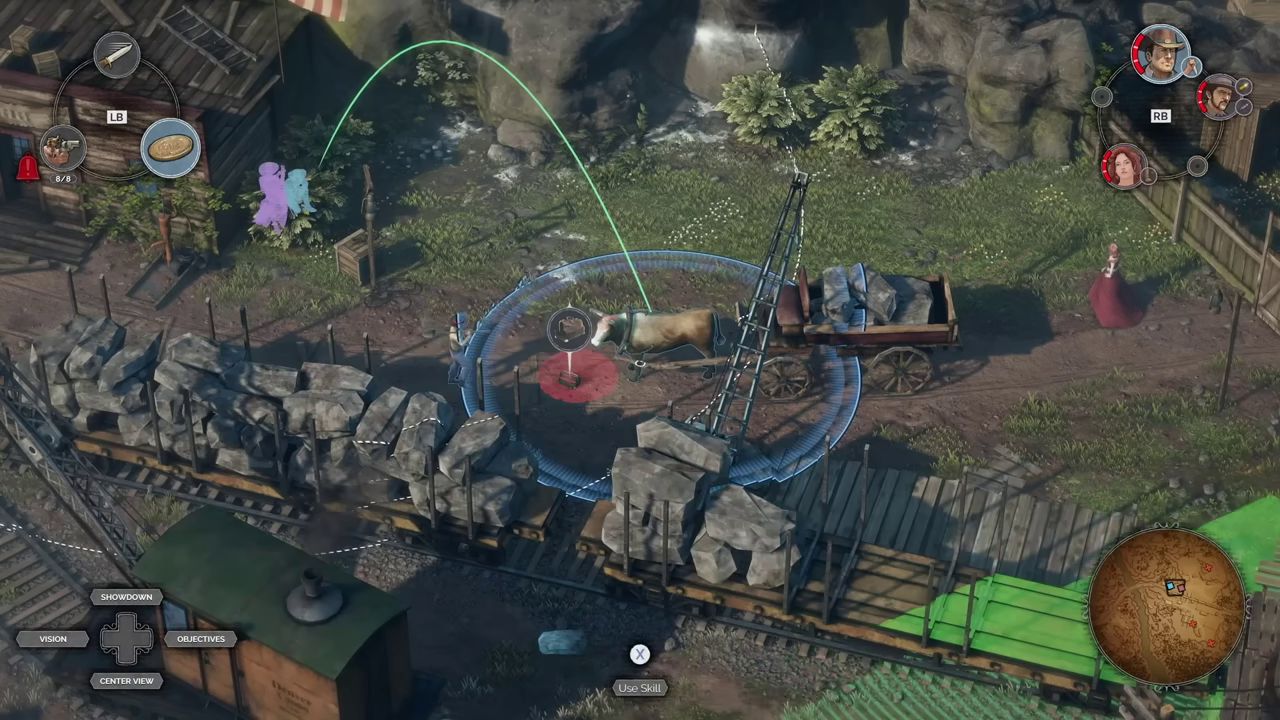
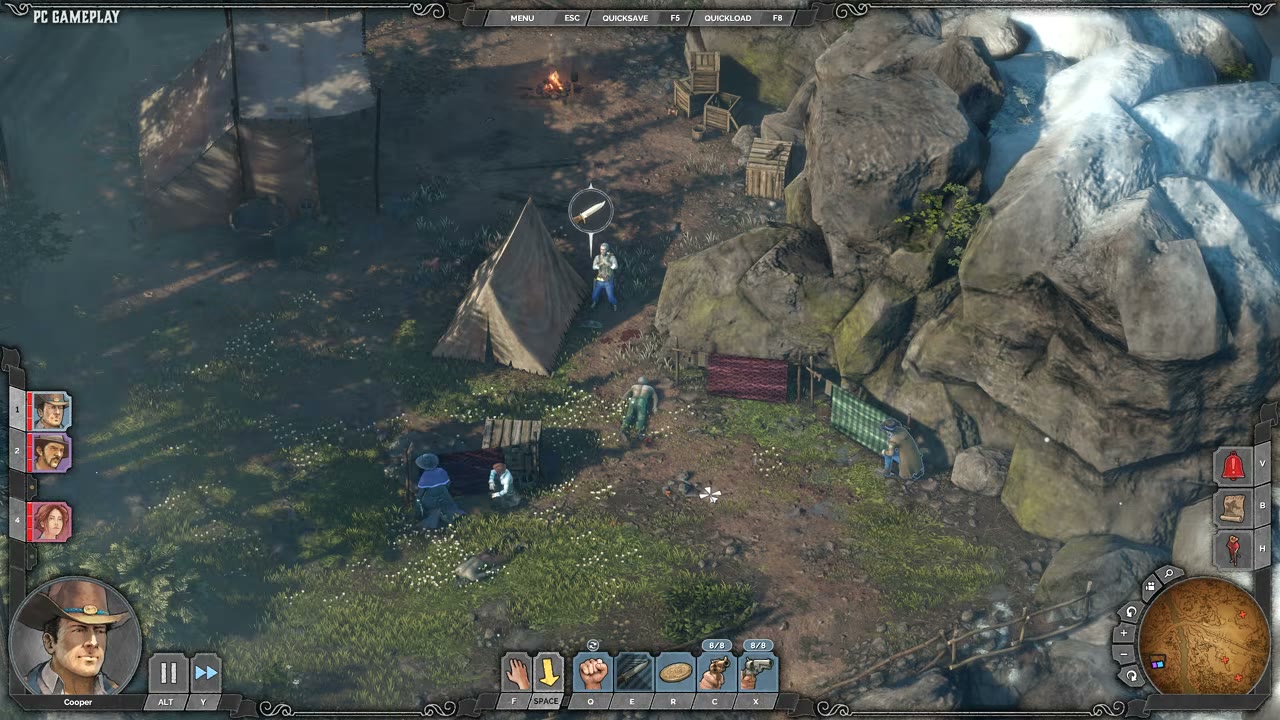
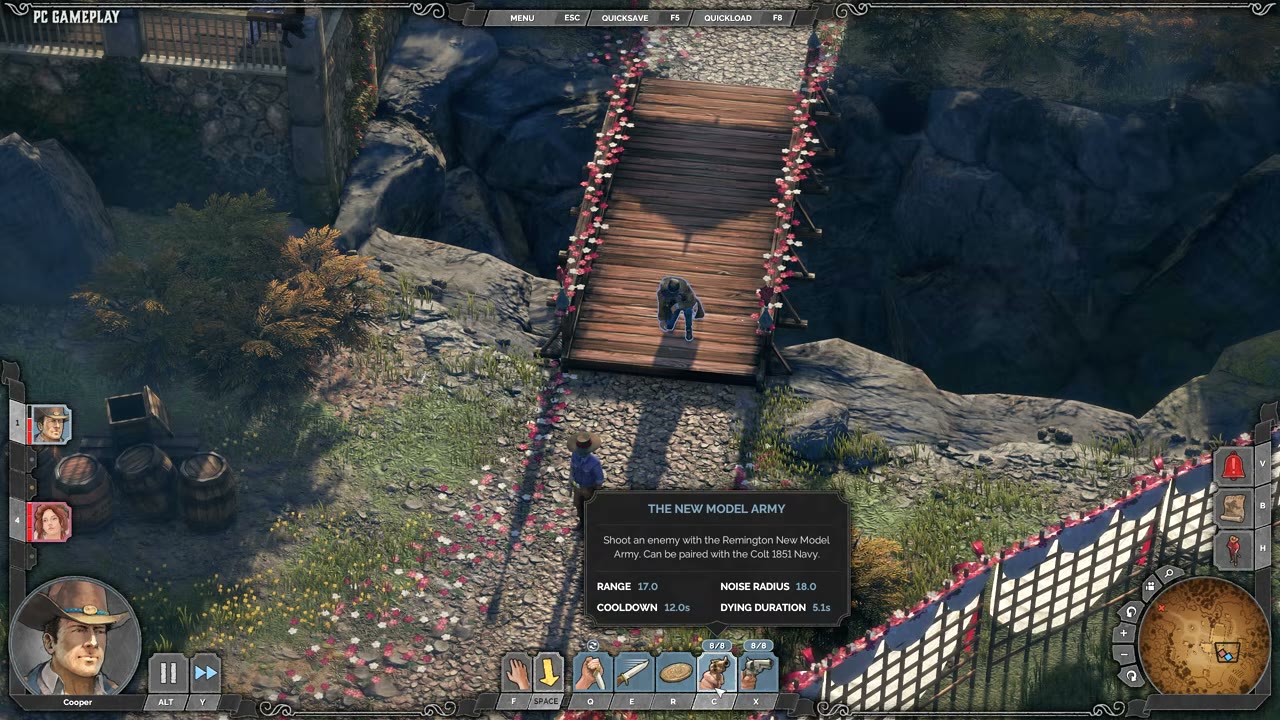
The game gives the player multiple ways to redirect attention and manipulate enemy positions without direct confrontation. Noises, coins, whistles, thrown bags, cats, tied allies, footprints, flirtation, and connected targets can pull or turn enemies, narrow vision cones, break patrol timing, or set up ambushes. Different enemy types respond differently, so distraction use is a broad tactical pillar rather than a single ability.
3. Design Intent / Job Story
When I need to move or turn enemy attention without direct confrontation, I want to create controlled distractions and noise stimuli, so that I can open sightline gaps, lure targets into prepared spaces, or synchronize safe takedowns.
4. Role in Gameplay Loop
- Turns enemy attention into a manipulable tactical resource rather than a fixed obstacle.
- Creates safe movement and takedown windows by relocating, rotating, or delaying guards.
- Supports non-lethal and indirect stealth plans through investigation behavior instead of combat.
- Connects character abilities, body handling, environmental hazards, and Showdown timing into repeatable setup tools.
- Adds enemy-type variation because some archetypes follow tracks, tied allies, bodies, or lures differently.
5. Preconditions
- A gameplay mission is active with enemy AI, civilians, animals, or alert-capable NPCs present.
- At least one controllable character has access to a distraction, lure, noise-making action, body-related lure, disguise/social lure, track lure, or environmental attention source.
- The target NPC is in a state that can perceive the stimulus through sight, hearing, path tracking, ally rescue behavior, or social interaction.
- The stimulus location, target, or path is valid for the chosen ability or world interaction.
- Enemy perception, investigation, alarm, and return-to-routine states are active so the response can resolve.
- The player can read enough sightline, noise radius, patrol, or witness information to judge the risk of using the distraction.
6. Parameters
| Parameter | Value | Type | Notes |
|---|---|---|---|
| Stimulus type | Noise / visual object / body / tied ally / footprint track / social lure / environmental incident | enum | Category used to select the AI response pattern. |
| Stimulus origin | Character, thrown object, body, NPC, footprint trail, accident site, target point | world reference | Position or object that enemies perceive and investigate. |
| Effective hearing area | Ability- or action-specific | distance/listener set | Enemies that can hear the stimulus, represented by noise radius or listener indicators where available. |
| Effective sight requirement | In cone / line of sight / inspected target | rule set | Whether the NPC must see the object or event before responding. |
| Eligible enemy types | Enemy archetype-specific | set | Enemy categories allowed to respond to the lure; source evidence distinguishes Ponchos, Long Coats, and standard guards. |
| Attention response | Turn / look / walk to source / follow track / rescue ally / investigate body / social hold / return | enum | Behavioral outcome applied after perception succeeds. |
| Investigation duration | System-defined | duration | Time spent inspecting, rescuing, or checking the stimulus before returning or escalating. |
| Alarm escalation condition | Detection, witnessed crime, body discovery, untied ally, unresolved suspicious evidence | rule set | Conditions that convert distraction response into alert or alarm. |
| Attention lock | Active / inactive | boolean/state | Whether the responder ignores other stimuli while committed to a special action such as untying an ally. |
| Showdown compatibility | Ability-specific | boolean/rule | Whether the distraction can be queued and synchronized with other planned actions. |
| UI feedback | Speech bubble, question mark, cone color, noise circle, listener ear, action marker | marker set | Player-facing indicators that the lure target or risk area has been established. |
7. Core Rules
- A distraction is any player-authored or world-authored stimulus that can make eligible NPCs look toward, walk toward, investigate, rescue, or otherwise reprioritize attention.
- Noise-based distractions use an audible response area or listener set; NPCs inside the effective hearing logic may leave their current routine to investigate the source.
- Directional or thrown distractions can shift vision cones or facing before they move the target, allowing short windows for crossing exposed space or acting behind the target.
- Social lures and disguise-driven interactions can pull or hold enemy gaze without necessarily creating a loud noise event.
- Body-based lures are valid attention sources: visible corpses, thrown bodies, incapacitated enemies, and tied allies can draw enemies into investigation or rescue behavior.
- Track luring can make enemies follow footprints in specific maps; most enemy types can follow tracks, while Ponchos are excluded from this response according to source evidence.
- Tied-ally luring can attract rescuers and does not immediately raise an alarm, but an alarm can occur if the ally is successfully untied.
- A rescuer currently untying an ally can ignore other sound stimuli, creating a special attention-lock state that may be exploited or must be handled carefully.
- Accident events and accident corpses can generate investigation without immediately identifying the player if the player remains unseen.
- Enemy archetypes modify distraction reliability; Long Coats can be difficult to lure but can be affected by track luring, while Ponchos resist some lure categories but can respond to tied allies.
- Distractions do not suspend normal perception: visible player characters, visible takedowns, loud weapons, discovered bodies, and watched targets can still escalate to suspicion or alarm.
- Distraction actions may be executed live or queued as part of a Showdown plan, but the AI response resolves in real time using current sight, hearing, pathing, and target-state rules.
- Distraction feedback should expose enough targeting, noise, listener, speech-bubble, question-mark, or cone-state information for the player to predict whether the setup is working.
- After an unresolved distraction is investigated, the target should either return to its prior routine, enter a new scripted state, or escalate according to the evidence discovered.
8. BDD Scenarios
Scenario: Noise lure pulls a guard from routine
- Given
- an eligible guard is inside the effective hearing area of a distraction
- When
- the player creates the noise stimulus at a valid location
- Then
- the guard leaves the current routine and investigates the stimulus origin
- And
- normal perception and alarm rules still apply during the movement
Scenario: Directional distraction opens a crossing window
- Given
- a guard's vision cone blocks a route
- When
- the player uses a distraction that turns or relocates the guard's attention
- Then
- the guard's facing or position changes long enough to create a temporary route window
- And
- the player can cross safely if no other enemy perceives the movement
Scenario: Track lure leads an enemy into an ambush
- Given
- a map state creates followable footprints
- When
- the player leaves tracks leading toward a prepared ambush area
- Then
- the enemy follows and investigates the track route
- And
- the target enemy type is eligible to follow tracks
- And
- the player can resolve the ambush if sight, timing, and alarm constraints are satisfied
Scenario: Tied ally attracts a rescuer
- Given
- an incapacitated enemy is tied and visible or otherwise discoverable by another enemy
- When
- the eligible enemy reacts to the tied ally
- Then
- the enemy moves toward the ally to untie them
- And
- the alarm is not immediate unless the ally is successfully untied or other evidence escalates the state
Scenario: Accident evidence draws investigation without revealing the player
- Given
- an accident event or accident corpse is visible to enemies
- When
- enemies discover the evidence
- Then
- they investigate the incident location
- And
- the player remains unseen
- And
- they do not automatically know the player's position from the accident alone
Scenario: Distraction fails because a stricter perception rule wins
- Given
- a distraction is active near an enemy
- When
- the enemy sees the player, witnesses a takedown, or discovers stronger alarm evidence
- Then
- the enemy escalates according to perception and alarm rules
- And
- the distraction does not prevent the higher-priority response
9. Edge Cases
- A distraction is heard by multiple enemies with different patrol states; response priority must avoid crowding, loops, or contradictory destinations.
- The target starts investigating one stimulus and receives a second stimulus before resolving the first.
- A lure destination is blocked by terrain, bodies, doors, crowds, or another NPC.
- The player moves or removes the stimulus object while an enemy is already en route.
- A body lure is visible to one enemy but hidden from another due to cone coverage, terrain, or crouched body handling.
- A tied ally is untied just as the player interrupts or neutralizes the rescuer.
- Footprints appear near a map boundary, water, stairs, ladders, or other traversal transition.
- An enemy archetype is immune or partially resistant to the chosen lure but still reacts to a different stimulus type.
- Showdown execution changes the world state before the distracted NPC reaches the stimulus location.
- Save/load occurs while a distraction is active, an enemy is investigating, or a rescuer is untying an ally.
10. QA Notes
- Verify each distraction category produces the expected AI response: facing change, movement to source, track following, ally rescue, body investigation, or social hold.
- Test noise radius and listener indicators against actual NPC reactions for quiet, medium, and very loud actions.
- Verify distraction use never suppresses normal vision, body discovery, watched-target, or alarm escalation rules.
- Validate enemy archetype exceptions, especially Ponchos, Long Coats, dogs, civilians, and guards already in investigation or alarm states.
- Test track luring only in maps and terrain states where footprints are intended to exist.
- Verify tied-ally luring does not immediately alarm, but escalates correctly when the rescue succeeds.
- Verify a rescuer in the untying state ignores or deprioritizes sound stimuli as designed.
- Verify distraction markers, speech bubbles, question marks, cone changes, and action-bar targeting feedback appear and clear at the correct times.
- Test queued distraction setups in Showdown with synchronized takedowns and body cleanup.
- Verify save/load restores active lure stimuli, investigating enemies, tied allies, bodies, tracks, and return-to-routine destinations consistently.
11. Mechanic Dependencies
- Showdown Synchronized Planning (Showdown planning lets the player queue lures and synchronize the resulting attention shift with takedowns or movement.)
- Squad Character Ability System (Most distraction tools are exposed as character-specific abilities or role capabilities within the squad ability system.)
- Environmental Interaction and Accident Kills (Environmental accident events and accident corpses can create investigation opportunities without directly revealing the player.)
- Takedown and Body Control (Bodies, tied enemies, and cleanup states can become lure objects that draw investigation or rescue behavior.)
- Enemy Perception and Alarm AI (Distractions work by feeding stimuli into enemy perception, investigation, vision-cone, hearing, and alarm escalation rules.)
12. UI Links
- Character Action Bar - The character action bar exposes distraction abilities, hotkeys, limited-use counters, and targeting entry points for the selected character.
- Showdown Mode Execution Interface - The Showdown execution interface displays queued distraction actions and lets the player execute them with synchronized follow-up moves.
- Tactical Spatial Markers - Tactical spatial markers show the vision cones, speech/question indicators, noise/targeting feedback, and world-space response cues needed to judge distraction safety.
References
- 1.
Steam Community :: Guide :: In-Depth Character Guide (L8-35 of 336)
- 2.
Desperados 3 Review (2:17-3:00)
- 3.
Desperados 3 Let's Play Gameplay Walkthrough Pt 6 Closing In On New Orleans [1440p w/ Commentary] (44:10-45:05)
- 4.
Desperados 3 Let's Play Gameplay Walkthrough Pt 6 Closing In On New Orleans [1440p w/ Commentary] (46:57-47:05)
- 5.
Desperados 3 Let's Play Gameplay Walkthrough Pt 9 Queen's Nest [1440p w/ Commentary] (43:05-43:50)
- 6.
DESPERADOS III - Know THESE Important Tips Before Playing (2:19-2:35)
- 7.
DESPERADOS III - Know THESE Important Tips Before Playing (8:01-8:32)