![Visual reference from Desperados 3 Let's Play Gameplay Walkthrough Pt 7 Louisiana Voodoo [1440p w/ Commentary] at 40:15-40:30](/published/media/desperados-3/source-330-preview-1865ff2737.jpg)
![Visual reference from Desperados 3 Let's Play Gameplay Walkthrough Pt 12 The Wages Of Pain [1440p w/ Commentary] at 1:08:45-1:09:45](/published/media/desperados-3/source-335-preview-96166de854.jpg)

Takedown and Body Control
Base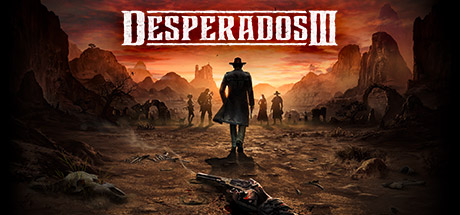
Desperados 3
- Status
- Released
- Year
- 2020
- Genre
- Strategy
- Platforms
- Windows, macOS, Linux
1. Summary
Enemy removal supports both lethal and non-lethal approaches. Players can assassinate enemies, knock them out, tie them up, carry or drag bodies, hide bodies in map containers and foliage, and exploit the fact that discovered corpses or incapacitated enemies can trigger different reactions. The system makes cleanup and concealment part of the core stealth loop rather than an aftermath detail.
3. Design Intent / Job Story
When I need to remove an enemy from an observed route or objective area, I want to neutralize, secure, and conceal the body, so that the squad can progress without triggering investigation or alarms.
4. Role in Gameplay Loop
- Converts stealth planning into persistent map control by removing watchers and patrol blockers.
- Creates the cleanup step after a takedown: secure, move, and conceal the body before other AI can react.
- Supports lethal and non-lethal mission approaches, including no-kill play where enemies are knocked out and tied.
- Forces players to account for enemy sightlines, patrol timing, noise, and body visibility after the initial attack.
- Provides tactical risk/reward around fast kills, slower non-lethal handling, and character-specific body-handling abilities.
5. Preconditions
- A valid enemy, incapacitated enemy, corpse, or body is present in the playable mission area.
- At least one controllable squad character has a currently valid takedown, knockout, tie, carry, drag, throw, or hide-body action.
- The acting character can reach the target or has a valid ranged/ability line according to that action's rules.
- Enemy perception and noise systems are active so witnesses, vision cones, and alarm reactions can evaluate the action.
- A concealment destination exists when the player attempts to hide a body in foliage, a container, or another valid hiding location.
- Character state allows the action: the acting character is alive, not incapacitated, not blocked by current animation/state, and has any required limited resource available.
6. Parameters
| Parameter | Value | Type | Notes |
|---|---|---|---|
| Takedown mode | lethal / non-lethal / environmental | enum | Determines whether the removal creates a corpse, unconscious secured target, or accident-style outcome. |
| Target validity | actor, target, range, path, line-of-sight | rule set | Conditions checked before a takedown, knockout, tie, carry, drag, throw, or hide command can execute. |
| Noise radius | action-specific | distance | Area in which enemies can hear the action, shown by circular feedback for relevant abilities/weapons. |
| Body visibility | hidden / visible / in vision cone | perception state | Whether AI can detect a corpse or incapacitated target and begin investigation or alarm behavior. |
| Body state | conscious / unconscious / tied / dead / carried / concealed | enum | Persistent state machine for enemies after neutralization and during cleanup. |
| Concealment destination | foliage / container / mission hide area / invalid | enum | Valid target categories for hiding or disposing of bodies. |
| Carry/drag movement modifier | character/action-specific | movement rule | How body handling constrains speed, posture, pathing, and available actions while moving a body. |
| Discovery reaction | investigate / alarm / fail-state trigger | enum | AI or mission response when a body, corpse, or incapacitated target is discovered. |
| Scoring classification | kill / non-lethal neutralization / accident | enum | Mission result classification used for badges, no-kill constraints, and replay goals. |
| Queue compatibility | action-specific | boolean/rule | Whether the action can be planned through Showdown Mode and what target state must remain valid at execution time. |
7. Core Rules
- Takedowns remove or incapacitate a target only if the selected action is valid for the actor, target type, range, and current line-of-sight/pathing state.
- Lethal removal creates a corpse; non-lethal removal creates an unconscious target that must be tied or otherwise secured to prevent it from remaining an unresolved risk.
- Tied or incapacitated targets and corpses remain physical world objects that can be seen, selected, carried, dragged, thrown by eligible abilities, or hidden in valid concealment locations.
- A visible body inside an enemy's vision cone triggers investigation or alarm behavior even if the takedown itself made little or no noise.
- Noise-producing takedowns and weapons expose a noise radius before or during use; enemies inside the audible area can react even if they do not see the body.
- Concealment succeeds only when the body reaches a valid hiding location such as foliage, a container, or a mission-specific hide area.
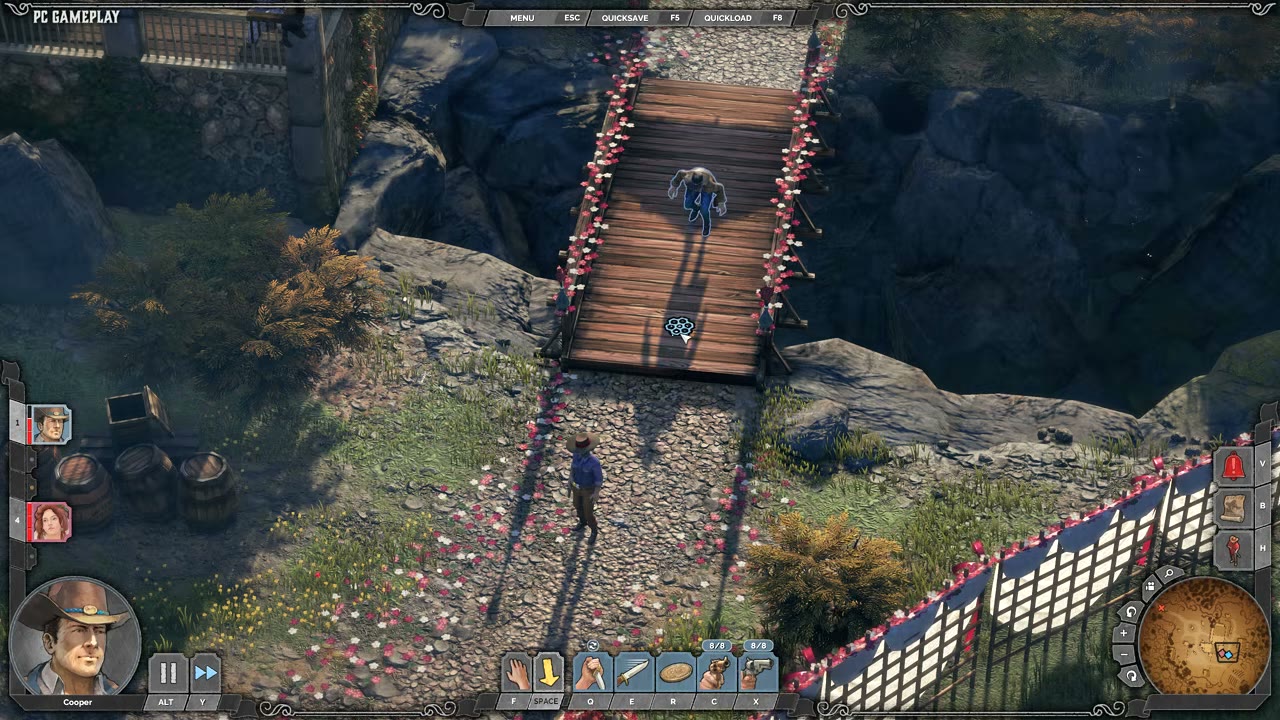
- Body handling changes the actor's tactical profile: carrying or dragging limits normal action flow and can expose the actor/body to patrols while cleanup is in progress.
- Some body-control abilities are character-specific, but the system should expose them as reusable action capabilities rather than hard-coding them to a single scenario.
- Synchronized planning can combine multiple takedowns or cleanup actions, but each queued action still resolves through the same validity, sight, noise, and body-state rules.
- Mission scoring and badges must distinguish lethal kills from non-lethal neutralizations when challenge conditions require no kills or specific cleanup constraints.
8. BDD Scenarios
Scenario: Silent lethal takedown with cleanup
- Given
- a guard is isolated outside other enemies' active viewcones
- When
- the player executes the takedown and moves the corpse to valid concealment
- Then
- the guard is removed from the patrol space
- And
- the selected character has a valid silent takedown action
- And
- no investigation is triggered by body visibility
Scenario: Non-lethal neutralization for no-kill play
- Given
- a mission challenge or player goal discourages lethal kills
- When
- the player knocks out the enemy and secures them with a tie action
- Then
- the enemy is neutralized without counting as a lethal kill
- And
- the selected character can knock out and tie an enemy
- And
- the body remains a discoverable object until concealed
Scenario: Body seen after a quiet takedown
- Given
- a body lies inside an enemy's vision cone
- When
- the enemy's perception checks the body location
- Then
- the enemy investigates or escalates toward alarm according to AI rules
- And
- the player made no audible noise during the takedown
Scenario: Noise exposes a takedown attempt
- Given
- an action displays or implies a noise radius
- When
- the player executes the noisy takedown or weapon action
- Then
- those enemies receive an audio stimulus
- And
- one or more enemies are inside that audible area
- And
- they may investigate or raise an alarm even without line of sight
Scenario: Invalid concealment destination
- Given
- a character is carrying or dragging a body
- When
- the player attempts to hide the body there
- Then
- the hide action is rejected or unavailable
- And
- the player targets terrain that is not a valid hiding location
- And
- the body remains exposed at its current reachable position
Scenario: Synchronized double takedown
- Given
- two enemies can observe or alarm each other if only one is removed
- When
- the queued actions execute at the planned timing
- Then
- both enemies are neutralized before either can raise the alarm
- And
- the player queues valid takedown actions in Showdown Mode
- And
- each resulting body still requires normal cleanup if visible
9. Edge Cases
- A body is dropped or left at the edge of a vision cone and intermittently enters detection as patrols move.
- A non-lethal target is knocked out but not tied before another AI reaches the scene.
- A character begins carrying a body and is spotted while crossing an otherwise safe route.
- A takedown target changes state or moves during queued execution, invalidating the planned action.
- Multiple bodies are stacked in one concealment area and must remain interactable without selection ambiguity.
- A loud action is performed outside visual range but inside enemy hearing range.
- A body falls or is thrown into terrain where pathing, selection, or concealment validity could become ambiguous.
- Badge/no-kill tracking must not count tied unconscious enemies as kills, but must count any later lethal conversion correctly.
- An environmental accident creates a body that AI investigates differently from a witnessed direct attack.
- Reloading/checkpoint restoration must preserve body state, tied state, concealment state, and mission scoring flags.
10. QA Notes
- Verify lethal and non-lethal takedowns produce distinct body/scoring states.
- Verify knocked-out enemies can be tied and that tied state persists through save/load.
- Verify visible bodies trigger AI investigation/alarm even when the original action was silent.
- Verify noise radius feedback matches the enemies that actually react to the action.
- Verify bodies can be carried, dragged, thrown, dropped, and hidden only according to valid actor and destination rules.
- Verify concealment in foliage/containers prevents normal patrol discovery unless another rule explicitly exposes it.
- Verify Showdown-queued takedowns resolve correctly when targets move, die, or become invalid before execution.
- Verify no-kill badges and mission statistics classify non-lethal neutralization separately from kills and accident kills.
- Verify UI prompts, action bar availability, and spatial markers update immediately when a target changes from conscious to unconscious, tied, carried, dead, or concealed.
- Verify body handling remains readable and selectable when multiple bodies overlap in the same area.
11. Mechanic Dependencies
- Tactical Stealth Mission Loop (The tactical stealth mission loop depends on removing or bypassing patrol blockers; takedown and body control provides the remove-and-clean-up branch of that loop.)
- Showdown Synchronized Planning (Showdown synchronized planning can queue simultaneous takedowns, but body states and discovery risks still resolve through this mechanic afterward.)
- Squad Character Ability System (The squad character ability system supplies the concrete abilities that perform takedowns, ties, body throws, and other character-specific body-control actions.)
- Enemy Perception and Alarm AI (Enemy perception and alarm AI determines whether witnesses see takedowns, bodies, or carried corpses and how investigation or alarm states escalate.)
- Lethal and Non-Lethal Combat Resource Limits (Lethal and non-lethal combat resource limits govern which removal actions are available, how weapons/noise are constrained, and how no-kill play is distinguished from kills.)
- Distraction and Noise Manipulation (Distraction and noise manipulation creates safe timing windows for takedowns and can pull enemies away from bodies or concealment routes.)
- Mission Challenges, Badges, and Replay Goals (Mission challenges, badges, and replay goals evaluate whether enemy removal was lethal, non-lethal, detected, or compatible with no-kill objectives.)
- Movement, Terrain, and Cover Navigation (Movement, terrain, and cover navigation determines whether actors can reach targets, move bodies through routes, and access concealment locations.)
12. UI Links
- Mission Badges Results Screen - The mission badges results screen reports challenge outcomes affected by lethal kills, no-kill completion, alerts, and cleanup-related constraints.
- Character Action Bar - The character action bar exposes takedown, tie, carry, and character-specific body-control actions as selectable hotkeyed abilities.
- Gameplay Minimap - The gameplay minimap supports body-control planning by keeping patrol/objective context visible while the player relocates or cleans up bodies.
- Right Side Alert And Hint Buttons - Right-side alert and hint buttons surface warning or guidance states that can be triggered by detection, alerts, or contextual stealth/body-control tutorials.
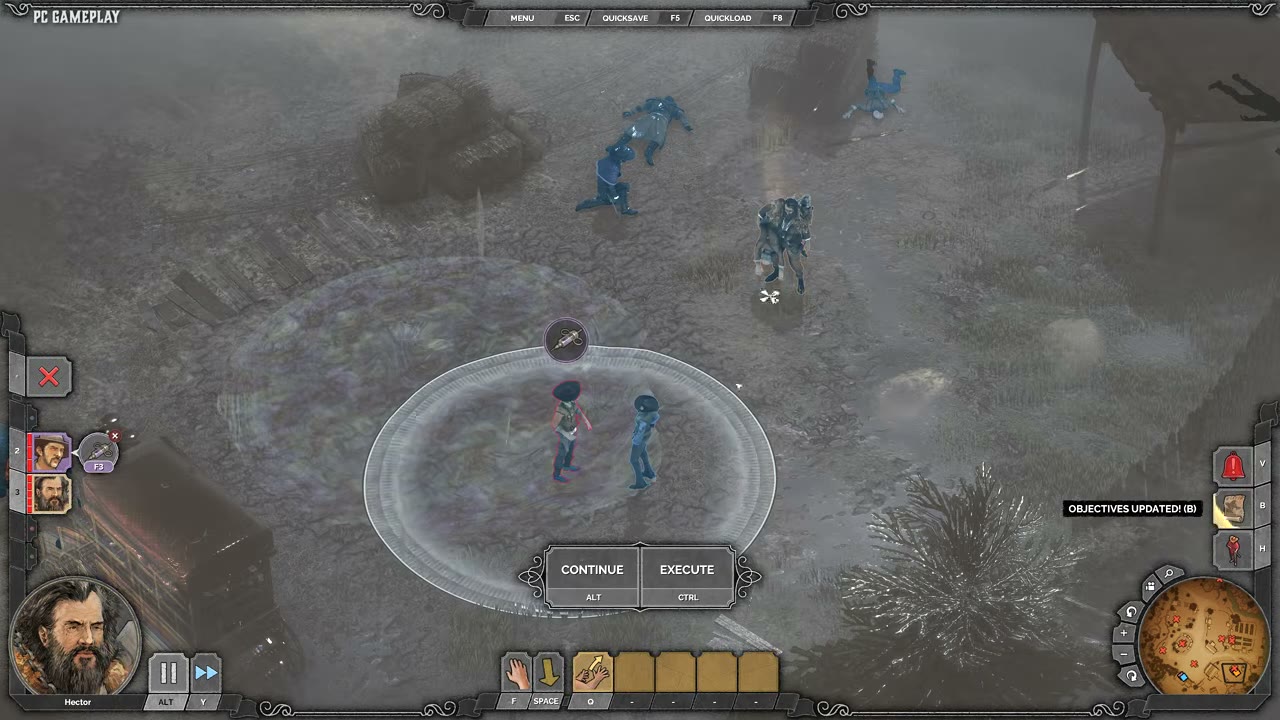
- Showdown Mode Execution Interface - The Showdown Mode execution interface lets players queue synchronized takedowns and verify planned targets before executing them in real time.
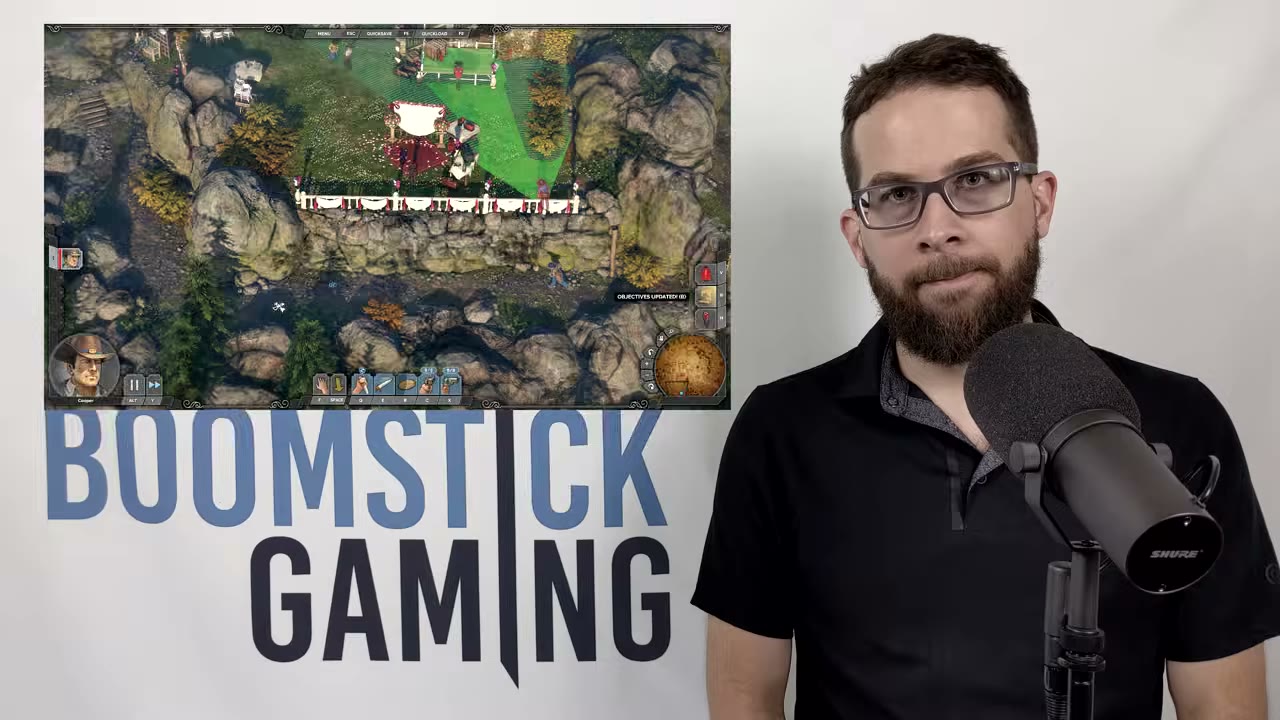
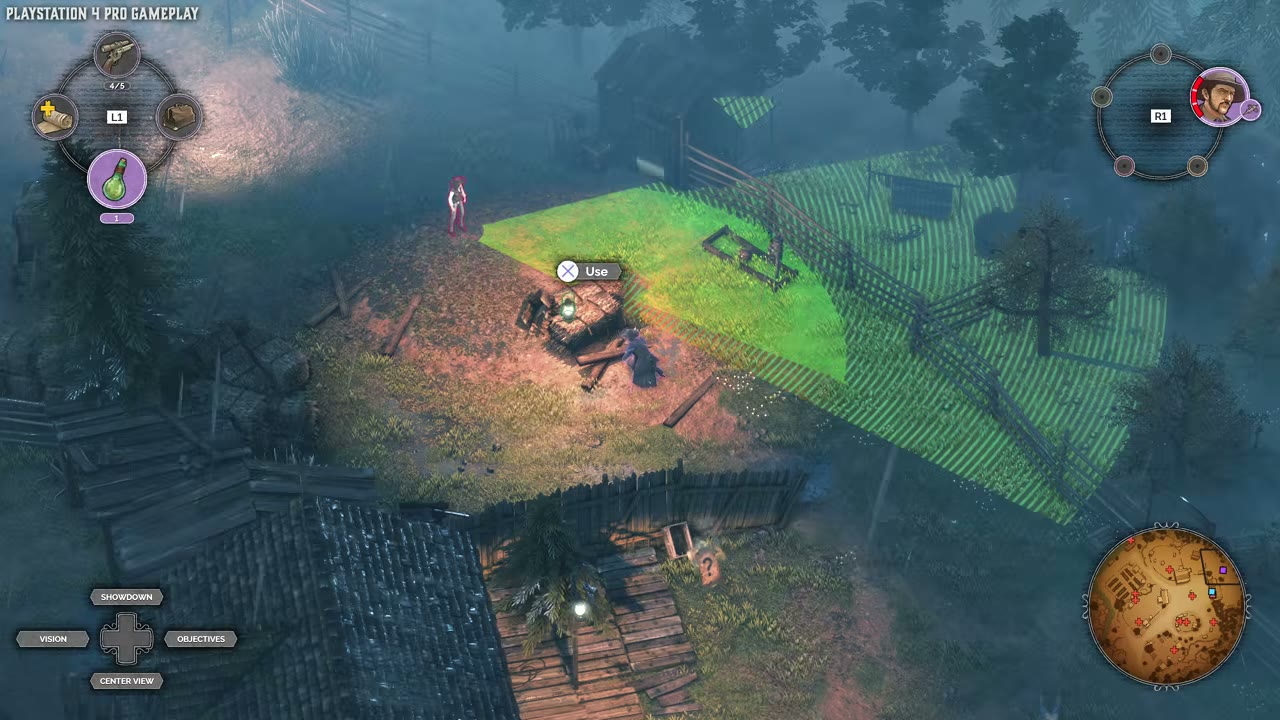
- Tactical Spatial Markers - Tactical spatial markers show vision cones, alert icons, targeting prompts, and noise/awareness overlays that determine whether takedowns and bodies are safe.
References
- 1.
Desperados III (L5-9 of 50)
- 2.
DESPERADOS III - Know THESE Important Tips Before Playing (1:09-2:19)
- 3.
DESPERADOS III - Know THESE Important Tips Before Playing (3:17-4:43)
- 4.
DESPERADOS III - Know THESE Important Tips Before Playing (5:55-6:29)
- 5.
DESPERADOS III - Know THESE Important Tips Before Playing (7:52-8:19)
- 6.
Desperados 3 Let's Play Gameplay Walkthrough Pt 7 Louisiana Voodoo [1440p w/ Commentary] (40:15-40:30)
- 7.
Desperados 3 Let's Play Gameplay Walkthrough Pt 12 The Wages Of Pain [1440p w/ Commentary] (1:08:45-1:09:45)