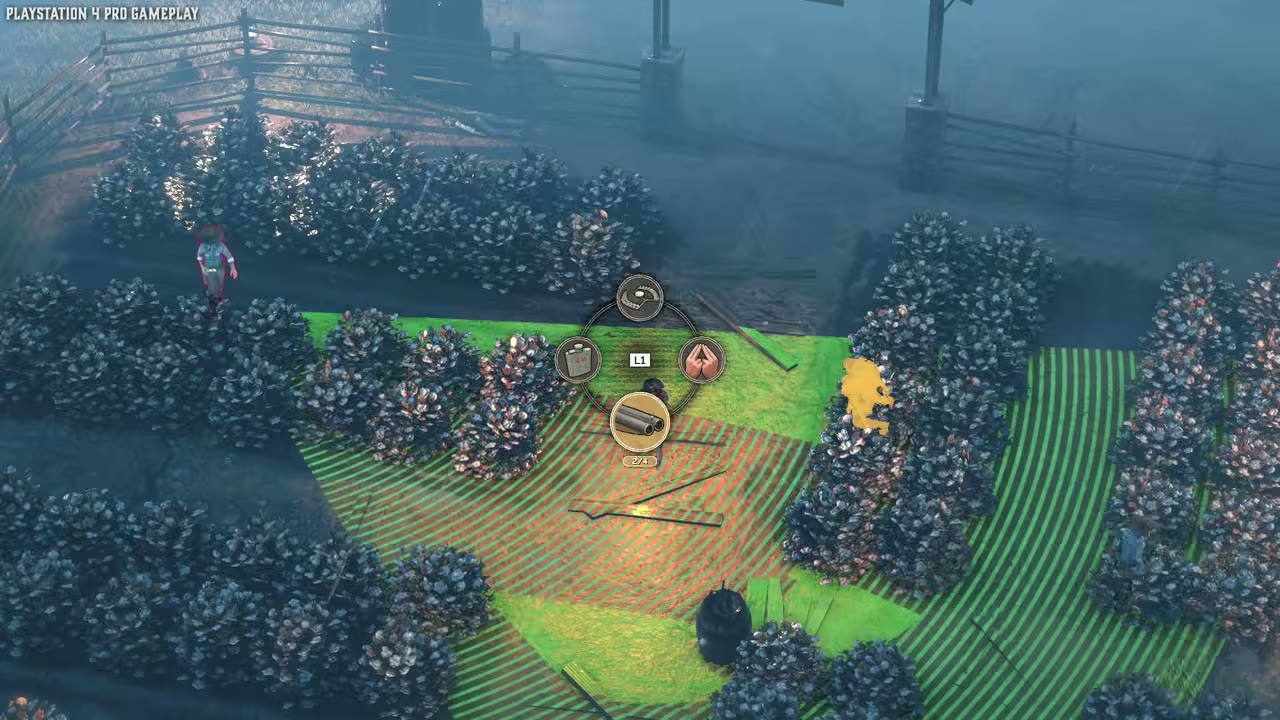

Lethal and Non-Lethal Combat Resource Limits
Base
Desperados 3
- Status
- Released
- Year
- 2020
- Genre
- Strategy
- Platforms
- Windows, macOS, Linux
1. Summary
Although stealth is primary, direct engagement exists through melee attacks, firearms, traps, area weapons, damage, healing, cooldowns, and limited-use resources. Characters vary in health, kill speed, range, noise profile, ammunition or item counts, and whether they can handle special enemies, allowing firefights or aggressive solutions but making combat costly and situational compared with planned stealth.
3. Design Intent / Job Story
When a guarded encounter can be solved by force or restraint, I want lethal tools, non-lethal tools, healing, ammunition, noise, and enemy resistances to have clear limits, so that aggressive solutions remain viable but costly tactical choices rather than default answers.
4. Role in Gameplay Loop
- Makes direct violence a tactical fallback and planned ambush option, not a free replacement for stealth.
- Converts firearms, thrown weapons, traps, gas, healing, and knockout tools into constrained resources with visible risk.
- Forces players to compare lethal removal, non-lethal neutralization, accident kills, and avoidance against mission goals and alarm risk.
- Connects character specialization to enemy archetypes: some tools are quiet but slow, some are loud but decisive, and some enemy types resist specific effects.
- Creates recovery space after detection through health and healing, while preserving the high cost of firefights and alarms.
5. Preconditions
- A mission encounter is active with one or more controllable squad members.
- The selected character has a valid combat, knockout, trap, firearm, thrown weapon, healing, or control ability available.
- The target or ally satisfies the selected action's range, line-of-sight, enemy-type, body-state, and mission-state requirements.
- Any finite ammunition, charge, carried item, or recoverable tool required by the action is available.
- Enemy perception, noise, body discovery, and alarm systems are active so combat consequences can resolve.
- The acting character is alive, conscious, and not prevented from using the selected action by current animation, posture, or mission scripting.
6. Parameters
| Parameter | Value | Type | Notes |
|---|---|---|---|
| Action outcome | lethal / non-lethal / stun / heal / setup | enum | Primary systemic result of the selected combat or support action. |
| Resource model | finite ammo / finite charge / recoverable tool / cooldown / unlimited / mission-granted | enum | How the action is limited and restored after use. |
| Remaining uses | 0..capacity | integer | Current ammunition, item count, or charge count exposed to the player where applicable. |
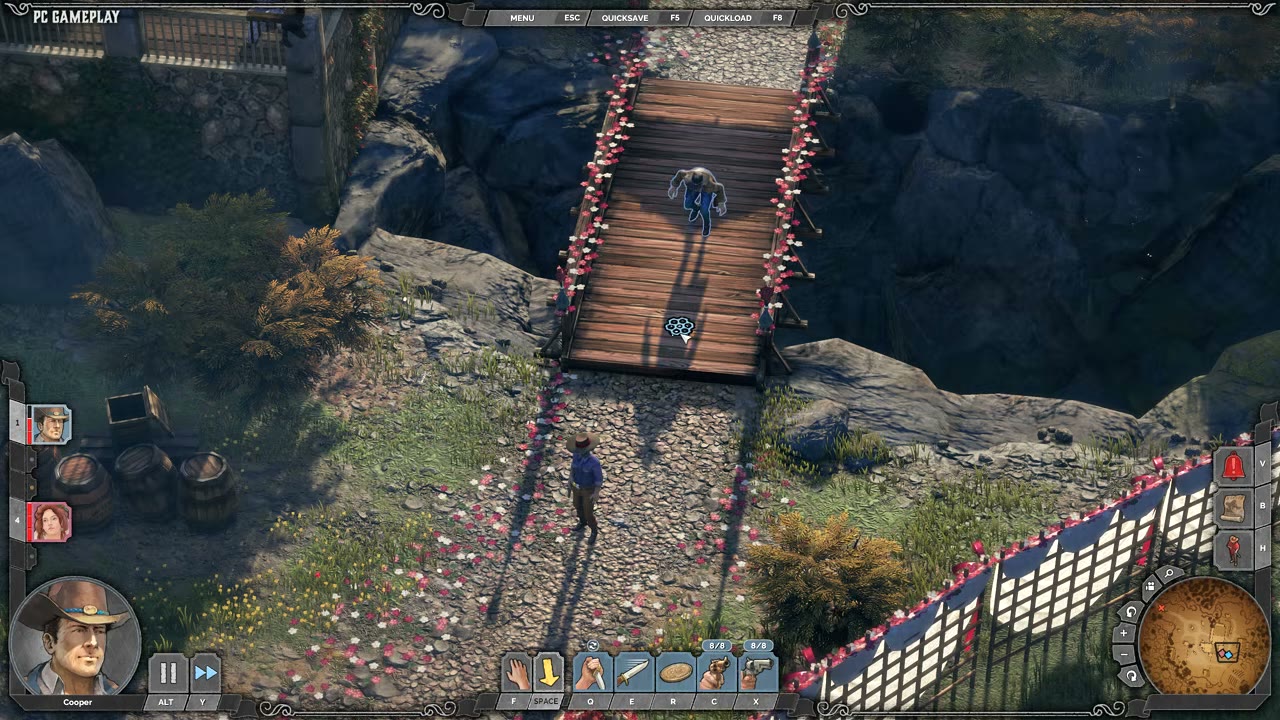
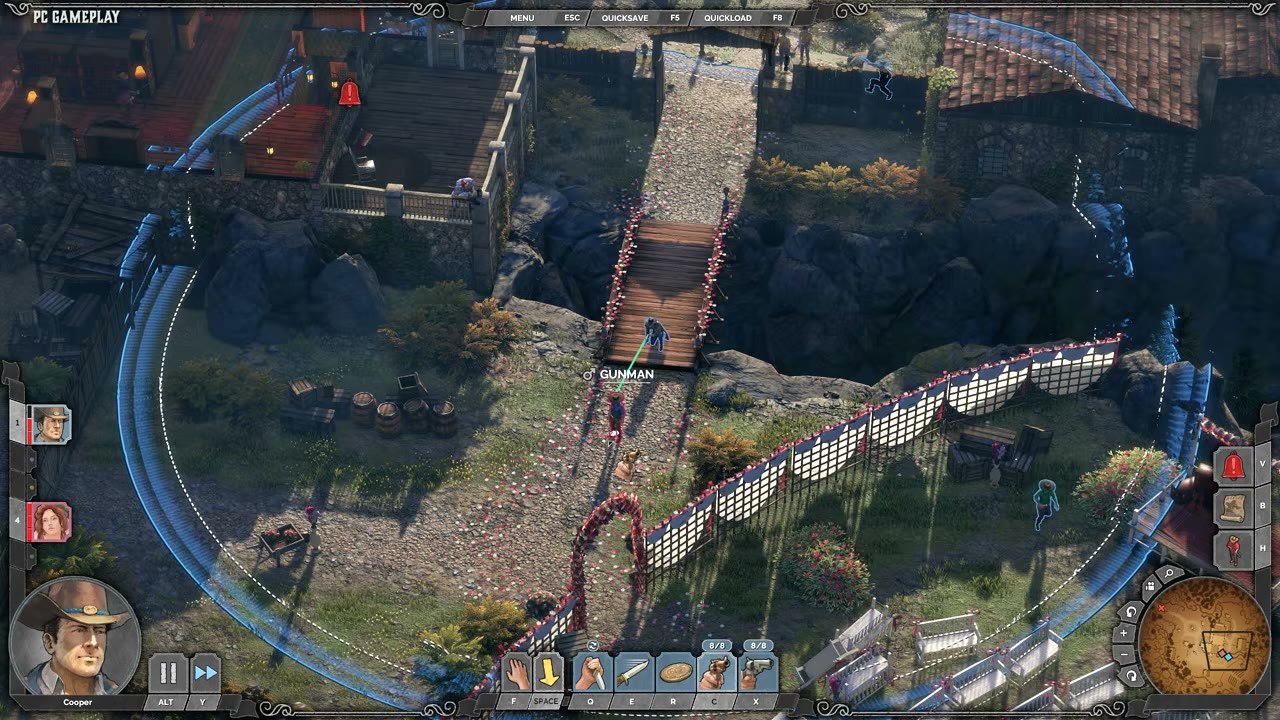
| Noise radius | Action-specific | distance/listener set | Area or enemies that can hear the action; shown by blue radius or listener indicators in observed gameplay. |
| Effective range | Action-specific | distance | Maximum valid distance for melee, thrown, firearm, healing, trap, or control use. |
| Wind-up and resolution time | Action-specific | duration | Time before the action takes effect, including travel, takedown, dying, or recovery animations. |
| Cooldown/action lockout | Action-specific | duration | Temporary block on related abilities after use, such as shared lockout between a thrown weapon and firearms. |
| Tool recovery requirement | Required / not required | boolean/rule | Whether a reusable thrown or placed item must be physically retrieved before reuse. |
| Target eligibility | Enemy type, ally, body state, line of sight, posture, range | ruleset | Conditions checked before an action can be executed or queued. |
| Enemy resistance profile | normal / poncho / long coat / dog / civilian / mission-specific | enum/ruleset | Modifies whether an action kills, knocks out, stuns, distracts, lures, or fails. |
| Health value | Character-specific | integer | Damage capacity for a squad member before incapacitation or mission failure. |
| Healing amount | Ability-specific | integer | Health restored by a valid healing action. |
| Area of effect | None / radius / cone / linked targets | shape/radius/cone | Multi-target footprint for shotgun, gas, trap, or linked-effect actions. |
| Alarm risk | none / investigate / local alarm / broad alarm | enum | Consequence if the action is heard, seen, or leaves discoverable evidence. |
| Scoring classification | kill / non-lethal / accident / alarm / objective shot | enum | Classification used by mission results and badge checks. |
7. Core Rules
- Combat actions may be lethal, non-lethal, disabling, healing, or setup-oriented; each action resolves through the selected character's ability profile and current tactical state.
- Lethal actions remove enemies permanently but usually create corpses, noise, or visible events that can trigger investigation, alarm, or badge consequences.
- Non-lethal actions create incapacitated enemies that remain a risk until tied, carried, concealed, drowned, dropped, or otherwise resolved by valid follow-up rules.
- Firearms and other ranged attacks consume finite ammunition or charges unless the source is explicitly recoverable or unlimited.
- Recoverable tools can be reused only after the tool or its carrier/body is reachable and retrieved; using the tool may temporarily block related actions through cooldown or shared-action lockout.
- Some high-impact actions are intentionally scarce, such as one-use crowd-control tools, while healing and some distractions can be reusable but constrained by positioning, target eligibility, or animation time.
- Every noisy action has a practical noise radius or listener set; the player must evaluate whether guards will hear the action before committing.
- Weapon noise varies by action profile: loud area weapons can alert a broad area, while quieter firearms or precision shots can still be risky if bodies are watched.
- Enemy archetypes modify combat validity and effect: some targets resist lures, cannot be moved by certain tools, require stronger takedowns, or are only stunned by effects that disable weaker enemies.
- Character health determines how much combat exposure a squad member can survive; healing restores health but does not remove alarm, watcher, or ammunition consequences.
- Showdown Mode can queue combat and resource actions, but execution still consumes resources and resolves normal timing, noise, visibility, body, and enemy-resistance rules.
- Mission scripting may grant special ammunition or require specific shots for objectives, but those exceptions should be explicit mission rules rather than general combat behavior.
- Invalid targets, blocked paths, missing resources, or resisted effects must not spend ammunition, charges, recoverable tools, or healing.
- Mission statistics and badges must distinguish kills, non-lethal neutralizations, accidents, alarms, and resource-constrained actions where those outcomes are relevant.
8. BDD Scenarios
Scenario: Quiet finite firearm shot
- Given
- the selected character has ammunition for a quiet firearm
- When
- the player fires the weapon
- Then
- one ammunition unit is spent
- And
- the target is valid, in range, and not watched during the shot or body fall
- And
- the target is neutralized according to the weapon profile
- And
- enemies outside the weapon's noise radius do not react
Scenario: Loud weapon alerts nearby guards
- Given
- the selected character has a loud area weapon available
- When
- the player fires the weapon
- Then
- the weapon resolves its damage or stun effect in its area of effect
- And
- one or more enemies are inside the weapon's hearing area
- And
- listeners inside the hearing area investigate or escalate toward alarm
Scenario: Non-lethal neutralization requires follow-up
- Given
- the selected character can knock out a valid enemy
- When
- the player performs the non-lethal action
- Then
- the enemy becomes incapacitated rather than killed
- And
- the enemy remains a discoverable body until secured or concealed by valid follow-up actions
Scenario: Recoverable tool must be retrieved
- Given
- a reusable thrown tool has been used on a target
- When
- the player tries to use that tool again before retrieval
- Then
- the action is unavailable
- And
- the tool becomes available again only after the character retrieves it from the world or body state that carries it
Scenario: Enemy archetype resists an action
- Given
- a combat action is valid against normal enemies but modified by a resistant archetype
- When
- the player targets the resistant enemy
- Then
- the action is blocked or downgraded according to the resistance profile
- And
- no resource is spent if the command is rejected before execution
Scenario: Healing extends combat survival
- Given
- an ally has lost health but remains alive
- When
- the player uses the healing action
- Then
- the ally's health increases by the healing amount
- And
- a valid healer can reach or target that ally
- And
- existing alarm, noise, body, and ammunition consequences remain unchanged
Scenario: Showdown consumes resources normally
- Given
- Showdown Mode has queued multiple valid combat actions
- When
- the player executes the plan
- Then
- each action spends ammunition, charges, cooldowns, or recoverable tools exactly as it would in real time
- And
- the resulting noise, visibility, body states, and alarm reactions resolve normally
9. Edge Cases
- A firearm target dies in view of another guard even though the shot itself was quiet.
- A loud action is executed off-screen but inside another enemy's hearing radius.
- An action is queued with available ammo, but another queued action consumes or invalidates that resource before execution.
- A recoverable tool is attached to a body that is carried, thrown, concealed, or moved by another character.
- A non-lethal target is left untied or visible and becomes the source of investigation or alarm.
- An enemy archetype is immune to lure, trap, gas, disguise, or standard takedown effects and must communicate that resistance clearly.
- A one-use or scarce ability is selected against an invalid target; the resource must not be spent.
- A healing action is attempted on a full-health, dead, unreachable, or invalid ally.
- A mission-specific objective shot grants exceptional ammo while normal combat ammunition remains depleted.
- Reloading after resource use must restore ammunition, cooldown, health, recoverable-tool position, and body state from the saved point.
- Simultaneous Showdown actions overkill one target or target an enemy that has already been neutralized.
- Badge rules count a later lethal conversion of a non-lethal target correctly.
10. QA Notes
- Verify each finite firearm, scarce item, recoverable tool, and healing action updates its visible resource or availability state immediately after valid use.
- Verify invalid targets, resisted targets, blocked line of sight, and missing resources do not consume ammo or charges.
- Verify blue noise radius/listener indicators match actual enemy hearing reactions for quiet, medium, and loud actions.
- Verify loud area weapons trigger broad investigation/alarm behavior while quieter firearms still respect body visibility and watcher rules.
- Verify lethal, non-lethal, stun, accident, and healing outcomes update target state, body state, mission statistics, and badge tracking correctly.
- Verify resistant enemy archetypes such as Long Coats and Ponchos apply the intended modified effects across lures, traps, firearms, gas, and takedowns.
- Verify recoverable tools remain physically trackable through body carry, body drop, concealment, and save/load.
- Verify healing cannot exceed intended health limits and does not reset alarms or other tactical consequences.
- Verify Showdown queued combat actions consume resources and resolve timing/noise/body consequences identically to real-time execution.
- Verify mission-specific ammo exceptions cannot be exploited as general extra combat ammunition.
11. Mechanic Dependencies
- Showdown Synchronized Planning (Showdown can queue firearms, melee attacks, thrown tools, and other resource actions, but execution still consumes resources and resolves normal timing, noise, and visibility consequences.)
- Squad Character Ability System (Combat limits are defined per squad member because weapons, health, healing, traps, movement, takedown speed, and resource profiles come from each character's ability kit.)
- Environmental Interaction and Accident Kills (Environmental accidents are an alternative lethal path that can reduce direct combat resource spending and affect alarm/scoring differently from witnessed attacks.)
- Takedown and Body Control (Lethal and non-lethal combat produces corpses, unconscious bodies, tied enemies, and concealment needs that are resolved by takedown and body-control rules.)
- Enemy Perception and Alarm AI (Noise, visible bodies, watchers, enemy archetype resistance, and alarms determine whether lethal or non-lethal resource use succeeds safely or escalates.)
- Distraction and Noise Manipulation (Distractions and noise manipulation shape safe combat windows and determine whether noisy or quiet resource use pulls, distracts, or alerts enemies.)
12. UI Links
- Mission Badges Results Screen - Mission Badges Results can reward or penalize lethal kills, alarms, special constraints, and replay goals affected by combat-resource use.
- Post Mission Statistics Screen - Post Mission Statistics surface the downstream results of combat-resource choices such as kills, alarms, and mission completion outcomes.
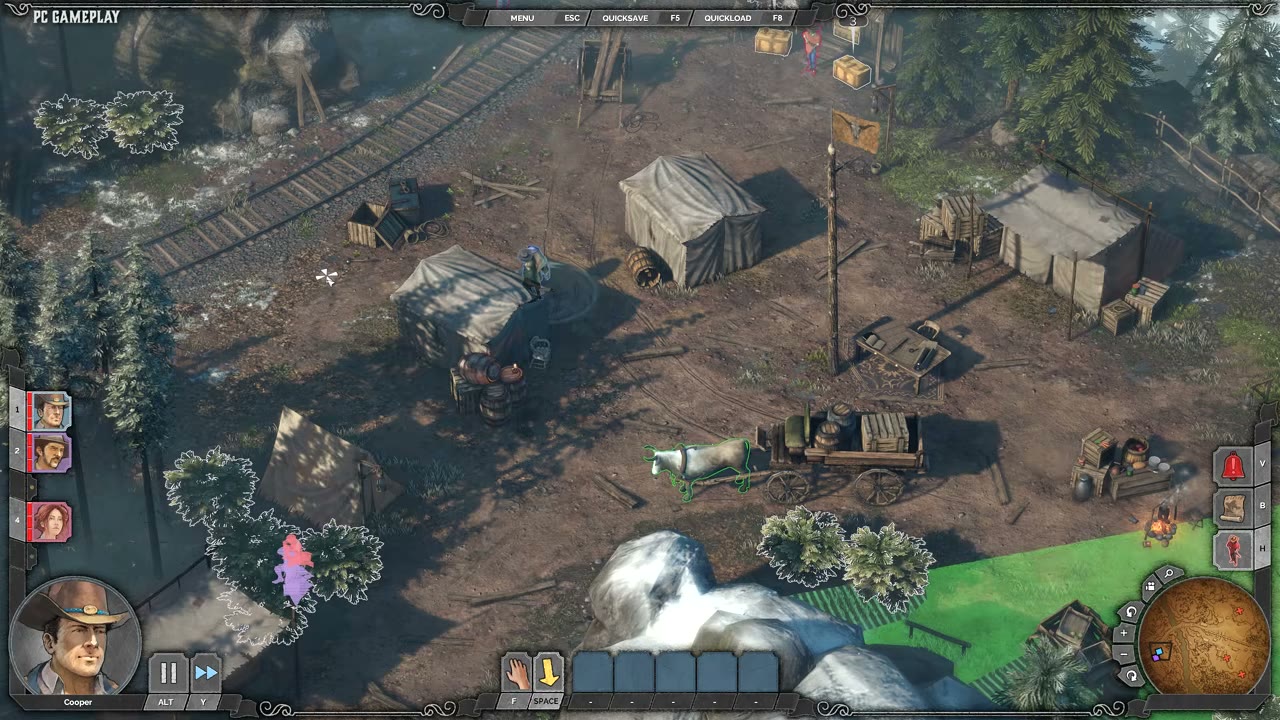
- Character Roster And Selected Portrait - The character roster and selected portrait communicate which squad member's health, weapons, and combat resources are currently active.
- Character Action Bar - The Character Action Bar displays selected-character combat actions, hotkeys, limited-use counters, cooldown/unavailable states, and resource consumption feedback.
- Showdown Mode Execution Interface - The Showdown Mode Execution Interface lets players queue and execute resource-consuming combat actions while showing queued markers and execution controls.
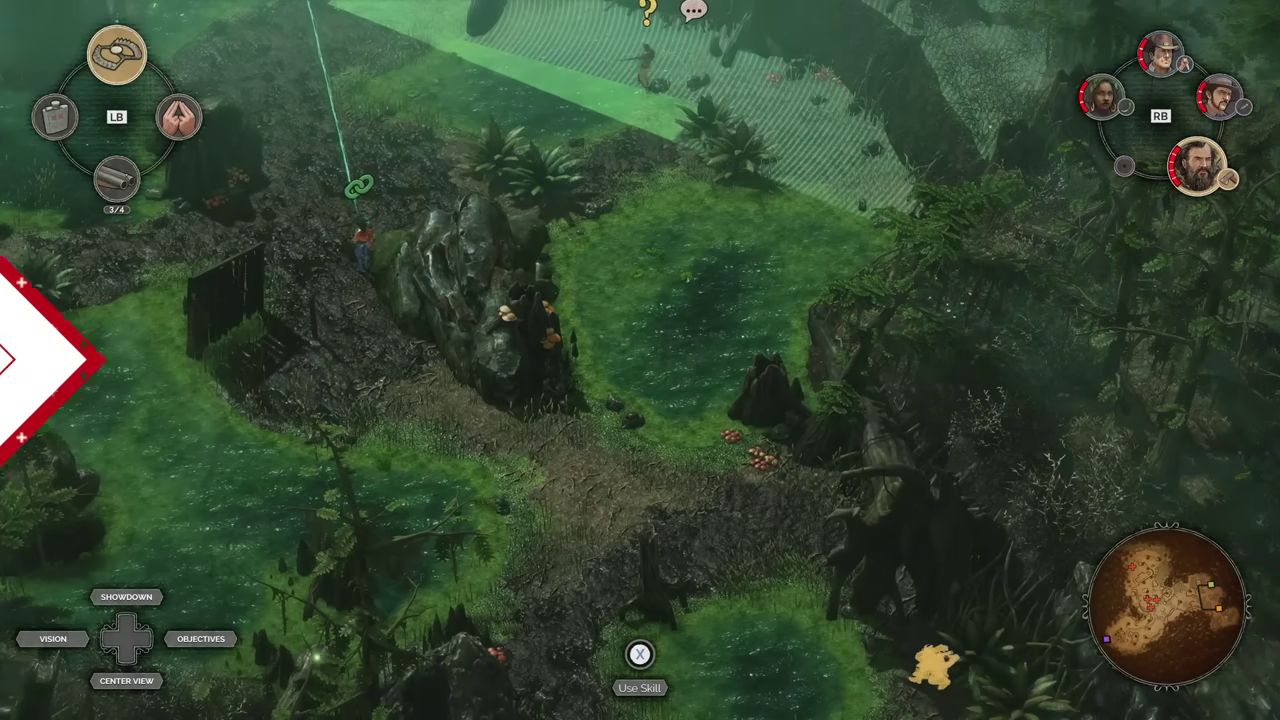
- Tactical Spatial Markers - Tactical Spatial Markers expose combat risk through noise radii, listener indicators, vision cones, target prompts, and alert markers that affect whether a resource can be used safely.
References
- 1.
DESPERADOS III - Know THESE Important Tips Before Playing (7:52-8:50)
- 2.
DESPERADOS III - Know THESE Important Tips Before Playing (4:52-6:30)
- 3.
Desperados 3 Review (1:54-4:02)
- 4.
Desperados III (L3-7 of 50)
- 5.
Steam Community :: Guide :: In-Depth Character Guide (L36-120 of 336)
- 6.
Steam Community :: Guide :: Character guides and tricks. (L19-160 of 167)
- 7.
DESPERADOS III - Know THESE Important Tips Before Playing (8:03-8:06)
- 8.
DESPERADOS III - Know THESE Important Tips Before Playing (8:23-8:27)