![Visual reference from Desperados 3 Let's Play Gameplay Walkthrough Pt 5 Bridge At Eagle Falls [1440p w/ Commentary] at 7:47-7:53](/published/media/desperados-3/source-326-preview-a04b89873e.jpg)

Movement, Terrain, and Cover Navigation
Base
Desperados 3
- Status
- Released
- Year
- 2020
- Genre
- Strategy
- Platforms
- Windows, macOS, Linux
1. Summary
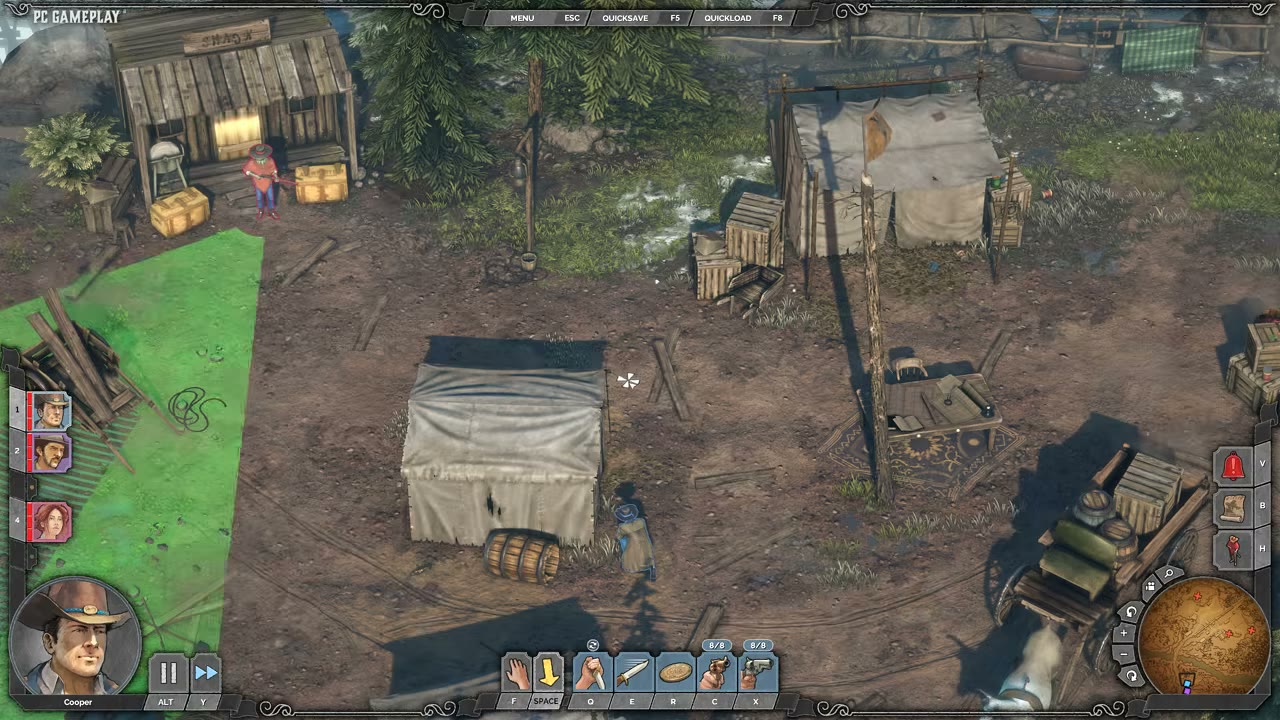
Traversal converts the map itself into a tactical resource: posture, movement speed, route geometry, foliage, climb/swim access, vertical drop points, and body-carry constraints determine which paths are safe. The player must choose between slow concealment and faster exposure windows while using terrain, bushes, rooftops, waterways, and character-specific mobility to bypass sightlines, recover resources, hide bodies, and reach objectives.
3. Design Intent / Job Story
When I need to move a squad member through watched terrain, I want to choose the right posture, path, and terrain interaction for that character, so that I can reach objectives or reposition bodies without being detected.
4. Role in Gameplay Loop
- Makes route selection a core tactical decision rather than simple point-to-point movement.
- Creates the stealth tradeoff between crouched concealment and faster standing/sprinting movement across exposed gaps.
- Differentiates squad members through movement speed, climb access, swim access, and body-handling mobility.
- Turns bushes, houses, wells, vertical drops, ropes, ivies, waterways, and other terrain features into planning affordances.
- Connects movement timing to enemy vision cones, patrol cycles, Showdown execution, body concealment, and objective approach routes.
5. Preconditions
- An active mission map contains traversable terrain, blockers, and tactical route options.
- At least one controllable squad member is alive, selectable, and able to receive movement commands.
- Enemy perception, patrol, and alarm systems are active when the route crosses watched space.
- Terrain affordances such as bushes, climbable surfaces, ropes, water, rooftops, ladders, wells, or houses are present only where the mission layout supports them.
- The selected character's mobility profile defines whether they can climb, swim, move quickly, carry bodies efficiently, or use a specific route.
- A target position, interaction, body, objective, or queued command provides a reason to evaluate movement and route validity.
6. Parameters
| Parameter | Value | Type | Notes |
|---|---|---|---|
| Movement posture | Crouched / standing / sprinting where supported | enum | Current traversal posture affecting speed, visibility, and command timing. |
| Character mobility profile | Character-specific | rule set | Defines movement speed, climb access, swim access, body-carry capability, and special traversal limitations. |
| Route validity | Valid / blocked / gated | rule set | Whether the selected character can reach the target position through available terrain and affordances. |
| Vision exposure | Outside cone / weak cone coverage / effective sight / detected | perception state | How enemy sight evaluates the character or carried body along the route. |
| Detection timing window | Enemy- and situation-defined | duration | Time available to cross exposed sight before suspicion becomes confirmed detection. |
| Concealment terrain | Bush / foliage / house / well / mission-specific hide area | terrain flag | Terrain or object category that can hide characters or bodies when valid. |
| Climb affordance | Ivy / rope / ladder / authored climb point | terrain flag | Route element that only eligible characters can use. |
| Swim affordance | Waterway / authored swim route | terrain flag | Route element that only eligible characters can use. |
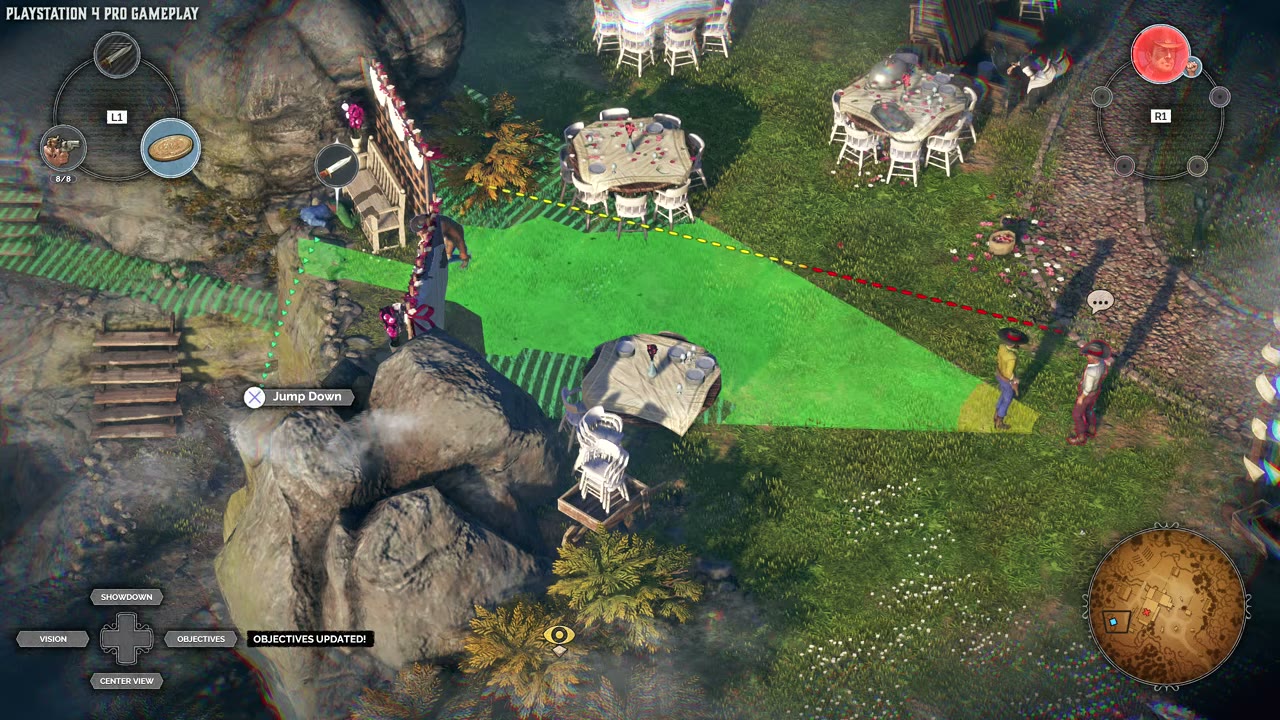
| Vertical traversal action | Jump down / jump attack / authored drop | interaction | Context action available at valid elevated positions. |
| Body-carry modifier | Character-specific | movement rule | Speed, posture, and capacity changes while carrying or moving a body. |
| Path preview feedback | Valid, invalid, risky, target prompt | UI/spatial marker | Feedback used to show where movement, interaction, or terrain commands can resolve. |
| Map support | Minimap / area map / spatial markers | UI state | Navigation aids that expose route context, markers, and local tactical positioning. |
7. Core Rules
- A movement command resolves through the selected character's current posture, path validity, and mobility profile.
- Crouching reduces exposure in relevant enemy vision coverage and can allow safe passage through weaker sight areas, but it slows movement and can increase detection risk when timing matters.
- Standing or sprinting increases traversal speed and can be the correct stealth choice for short exposed crossings or fast ambush approaches when the character can beat the detection timer.
- Enemy vision cones, patrol facing, terrain obstruction, and detection fill determine whether a route is currently safe.
- Bushes and other valid hiding/concealment locations can hide characters or bodies from normal sightline checks when the object is fully within the concealment area.
- Bodies remain traversal constraints after takedowns; carrying or moving them uses the same route, posture, perception, and terrain-validity pressures as character movement.
- Valid body hiding destinations include foliage and other mission-supported concealment spaces such as houses or wells.
- Character mobility gates route access: some characters can climb ivies or ropes and swim, while others cannot use those traversal affordances.
- Body-carry speed is character-dependent; some characters slow heavily while carrying bodies, while stronger carriers can move bodies faster or handle more than one body.
- Vertical traversal can create tactical options such as jump-down actions or jump attacks from higher locations, but only from mission-authored valid positions.
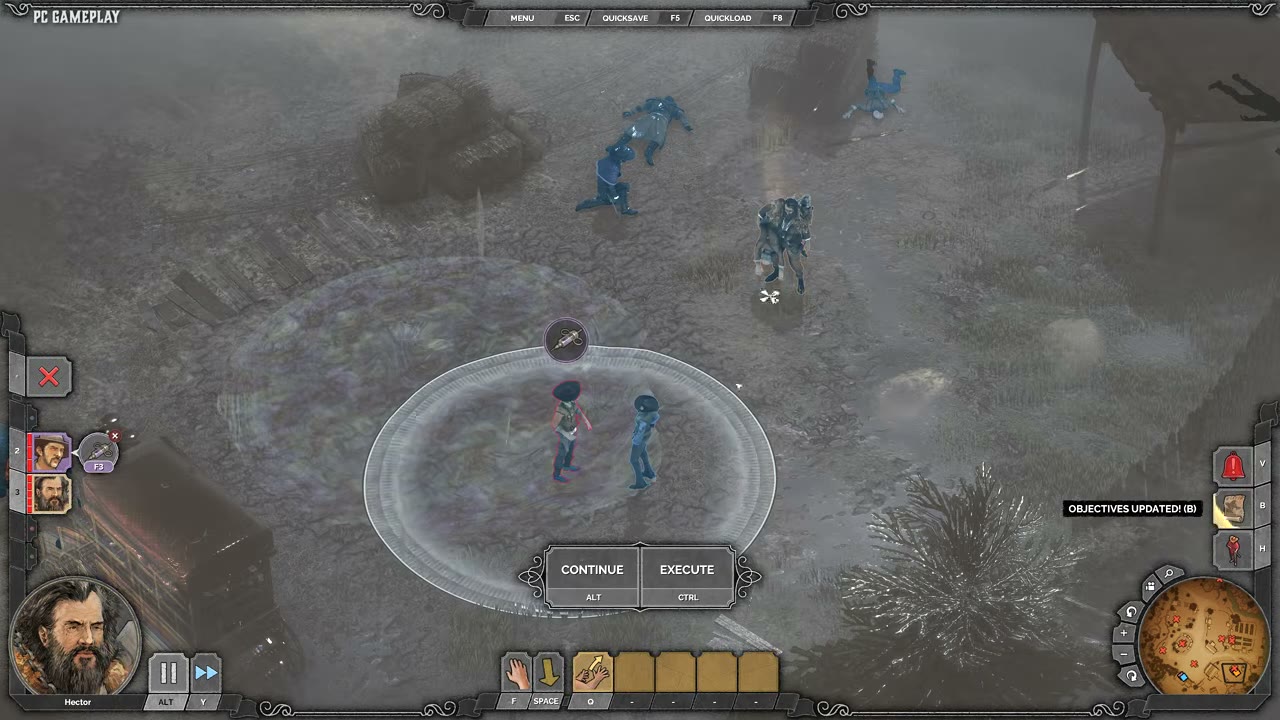
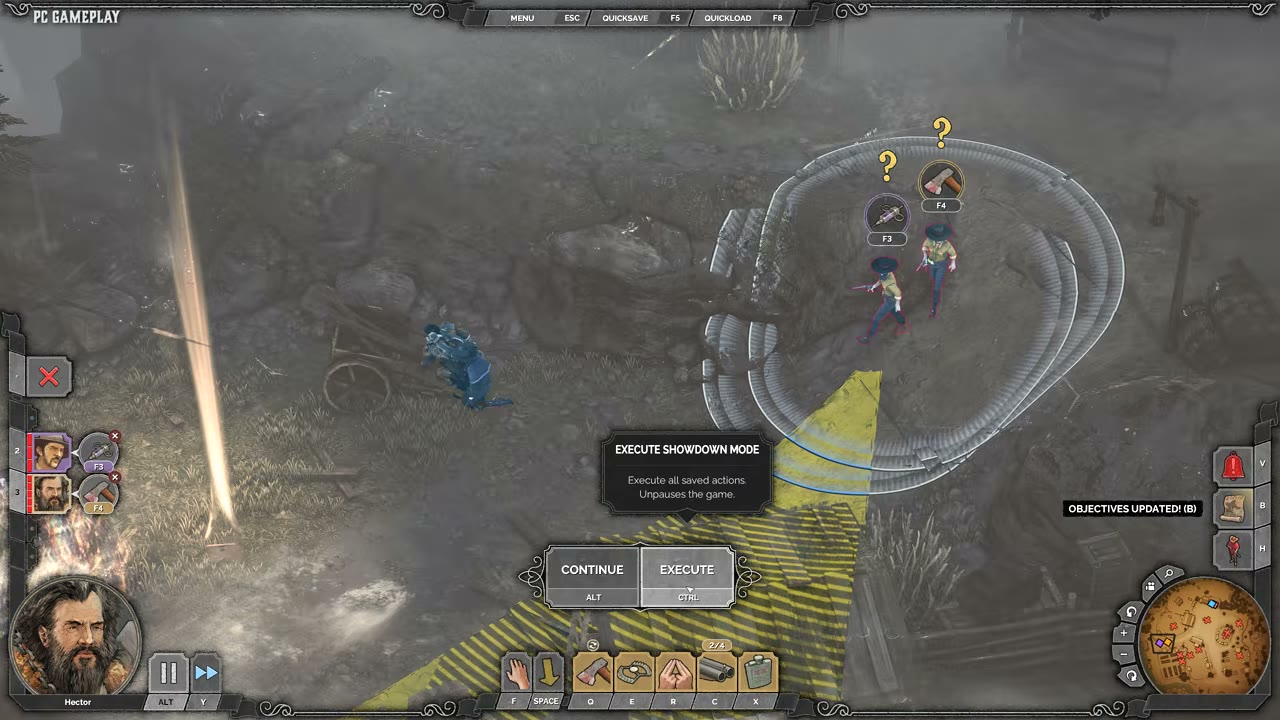
- Queued movement in Showdown Mode uses the same posture, pathing, and movement-speed rules once execution begins.
- The minimap, area map, spatial markers, action bar prompts, and view-cone overlays must represent movement-relevant information without making unsafe routes appear safe.
8. BDD Scenarios
Scenario: Crouch through partial vision coverage
- Given
- a character is near enemy vision coverage with terrain or cone conditions that allow crouched concealment
- When
- the player moves the character through the route while crouched
- Then
- the character can pass without alerting enemies if the route remains within the safe exposure rules
Scenario: Sprint across a short exposed gap
- Given
- a short route crosses enemy sight long enough that crouched movement would be detected
- When
- the player leaves crouch and moves quickly across the gap
- Then
- the character can reach the destination before detection completes
Scenario: Crouched ambush arrives too late
- Given
- a queued takedown requires fast movement to reach the target before nearby guards react
- When
- the character begins the queued action while crouched
- Then
- slower arrival can allow a guard to detect the action or raise the alarm
Scenario: Character-specific terrain gate
- Given
- a route requires climbing or swimming
- When
- the selected character lacks the required mobility affordance
- Then
- the route is unavailable or cannot be completed by that character
Scenario: Hide a body after moving it through cover
- Given
- a body is visible or at risk of entering enemy sight
- When
- the player carries the body along a valid route into a bush, house, well, or other valid concealment destination
- Then
- the body becomes concealed according to the hiding rules
- And
- patrolling enemies do not detect it through normal exposed-body vision checks
Scenario: Use a vertical drop point
- Given
- a character is positioned at a valid elevated traversal point
- When
- the player activates a jump-down or vertical traversal command
- Then
- the character moves to the authored lower position
- And
- any resulting stealth risk resolves through normal perception and timing rules
9. Edge Cases
- A crouched route is technically stealthier but too slow to cross a detection window safely.
- A standing or sprinting route is fast enough to beat detection but exposes the character if the destination is mistimed or blocked.
- A character is ordered onto a route requiring climb or swim access they do not have.
- A body is dropped at the edge of foliage and remains partially visible to patrols.
- A carried body changes the actor's speed enough that a previously safe route becomes unsafe.
- Queued movement becomes invalid because the target, patrol, body, or path state changes before Showdown execution.
- Multiple squad members or bodies overlap near a narrow traversal point, creating selection or pathing ambiguity.
- A vertical traversal prompt is visible but the landing area becomes unsafe due to patrol movement.
- The minimap or area map suggests an available route that the selected character cannot actually traverse.
- Reloading after a movement failure must restore posture, position, path, body, concealment, and alert state cleanly.
10. QA Notes
- Test crouched, standing, and sprinting movement through the same enemy vision cone to verify detection timing differs correctly.
- Verify short exposed crossings can be solved by faster movement when source evidence indicates crouch would be too slow.
- Verify standing before a fast takedown or Showdown execution changes arrival timing without bypassing normal perception rules.
- Verify each character's climb, rope, ivy, swim, movement-speed, and body-carry restrictions match their mobility profile.
- Verify bushes and other concealment destinations hide characters or bodies only when placement is valid.
- Verify body-carrying routes update speed, pathing, action availability, and detection risk immediately.
- Verify jump-down and vertical traversal prompts appear only at authored valid positions and resolve to valid landing points.
- Verify path previews, interaction prompts, minimap markers, and spatial view-cone overlays remain aligned during camera pan and zoom.
- Verify save/load preserves posture, route position, body concealment, and AI awareness after traversal failures.
- Verify unsupported routes are clearly rejected instead of allowing characters to clip through blocked terrain or forbidden water/climb paths.
11. Mechanic Dependencies
- Tactical Stealth Mission Loop (The tactical stealth mission loop depends on route planning through terrain and cover to reach objectives while avoiding patrol sightlines and alarms.)
- Showdown Synchronized Planning (Showdown queued movement and ambushes resolve through the same posture, speed, route, and detection timing rules once execution begins.)
- Squad Character Ability System (The squad ability system supplies the character-specific mobility profiles that gate climb access, swim access, speed, and body-handling capability.)
- Takedown and Body Control (Body movement and concealment use traversal routes, posture, bushes, houses, wells, and character-specific carry speed as part of cleanup after takedowns.)
- Enemy Perception and Alarm AI (Enemy perception and alarm rules determine whether movement posture, route timing, body visibility, and terrain cover are safe or trigger detection.)
12. UI Links
- Pause Menu And Area Map - The Pause Menu And Area Map provides a larger mission-area view for re-planning movement routes and objective approach paths.
- Character Action Bar - The Character Action Bar exposes movement-adjacent commands, posture toggles, terrain interactions, and character-specific ability availability during traversal.
- Gameplay Minimap - The Gameplay Minimap gives compact route and position awareness while characters traverse active mission spaces.
- Showdown Mode Execution Interface - The Showdown execution interface displays queued movement/action planning that must respect posture, path, speed, and detection rules.
- Tactical Spatial Markers - Tactical Spatial Markers expose enemy vision cones, interaction prompts, and risky world-space positions that players use to plan safe movement routes.
References
- 1.
Desperados III (L4-16 of 50)
- 2.
DESPERADOS III - Know THESE Important Tips Before Playing (6:35-7:46)
- 3.
DESPERADOS III - Know THESE Important Tips Before Playing (5:55-6:23)
- 4.
Desperados 3 Let's Play Gameplay Walkthrough Pt 5 Bridge At Eagle Falls [1440p w/ Commentary] (7:47-7:53)
- 5.
DESPERADOS III - Know THESE Important Tips Before Playing (6:53-6:56)
- 6.
DESPERADOS III - Know THESE Important Tips Before Playing (7:32-7:35)