![Visual reference from Прохождение Shadow Tactics: Blades of the Shogun 5 - Нападение на Каназава Смерть Каге-самы [Проф.] at 27:35-30:45](/published/media/shadow-tactics-blades-of-the-shogun/source-45-preview-fd50c18054.jpg)
![Visual reference from Прохождение Shadow Tactics: Blades of the Shogun 5 - Нападение на Каназава Смерть Каге-самы [Проф.] at 36:13-36:23](/published/media/shadow-tactics-blades-of-the-shogun/source-45-preview-136c014732.jpg)

Normal Guards
Advanced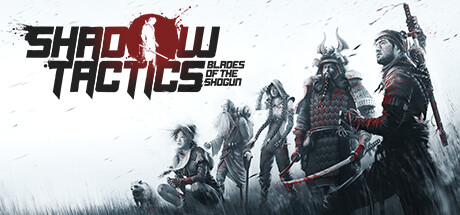
Shadow Tactics: Blades of the Shogun
- Status
- Released
- Year
- 2016
- Genre
- Indie, Strategy
- Platforms
- Windows, macOS, Linux
1. Summary
Normal Guards are the baseline human enemy tier in Shadow Tactics: Blades of the Shogun. They patrol, watch through visible vision cones, investigate suspicious inputs, raise alarms when detection completes, and can be redirected, bypassed, knocked out, killed, or hidden using the player squad's standard stealth toolkit. Because they are broadly vulnerable compared with specialist enemy types, they form the game's primary readable stealth obstacle and the main unit type used to teach patrol timing, line-of-sight management, body cleanup, and alarm avoidance.
3. Design Intent / Job Story
When I am moving through a guarded route, I want standard enemies with readable patrols and exploitable reactions, so that I can plan, test, and execute stealth solutions using movement, distraction, concealment, and takedowns.
4. Role in Gameplay Loop
- Provides the baseline enemy behavior that players learn before specialized enemy exceptions are introduced
- Creates readable patrol, facing, and vision-cone timing problems in the core stealth loop
- Acts as the most flexible target for distractions, lures, silent takedowns, ranged eliminations, knockouts, and body-hiding play
- Serves as the common unit that can carry patrol groups and indirectly move harder enemy types when they follow a shared route
- Converts stealth mistakes into alarm pressure by spotting characters, bodies, suspicious actions, or unresolved investigation states
5. Preconditions
- A mission area contains one or more standard guard NPCs
- The guard has an assigned facing direction, patrol route, post, or investigation state
- Stealth detection, vision cone rendering, and alarm response systems are active
- The player character can enter the guard's sight, hearing, patrol, or interaction radius
- The guard is alive, conscious, and not already removed from play
6. Parameters
| Parameter | Value | Type | Notes |
|---|---|---|---|
| Enemy tier | Baseline / standard | enum | Places the guard below specialist enemies such as Straw Hat Guards and Samurai in systemic complexity. |
| Vision cone | Visible world-space cone | spatial volume | Primary line-of-sight area used for detection, planning, and readable stealth timing. |
| Detection states | Green, yellow, red | enum | Undetected, suspicion/build-up, and confirmed alert states surfaced through the vision/detection UI. |
| Patrol behavior | Stationary, patrol, investigation | authored path/state | Defines whether the guard watches a fixed area, follows a route, or temporarily investigates a stimulus. |
| Distraction susceptibility | True | boolean | Normal Guards can be redirected by standard lure/distraction mechanics where encounter scripting allows it. |
| Standard takedown susceptibility | True | boolean | Normal Guards can be neutralized by normal melee, ranged, trap, knockout, and coordinated ability solutions. |
| Body persistence | Dead or unconscious body remains | stateful object | The removed guard can still create detection/alarm risk if another NPC finds the body. |
| Alarm participation | True | boolean | A Normal Guard can trigger alarm escalation when detection completes or when relevant suspicious evidence is found. |
| Specialist immunity flags | None by default | set | Baseline does not include Samurai-style durability/disguise counters or Straw Hat-style lure resistance unless separately authored. |
| Exact cone dimensions | TBD | numeric | Needs direct evidence or implementation data to confirm whether all Normal Guards share identical cone size parameters. |
7. Core Rules
- A Normal Guard projects a visible vision cone aligned to its current facing direction; entering dangerous parts of the cone starts detection feedback.
- If detection completes, the Normal Guard transitions to alert behavior and raises or contributes to the mission alarm response.
- Normal Guards follow authored patrol paths, stationary watch posts, or scripted investigation routes, and their facing changes must update their vision cone in real time.
- Suspicious audio or visual events can cause a Normal Guard to turn, investigate, leave position temporarily, or follow a lure where allowed by the encounter setup.
- Normal Guards are vulnerable to the standard player counterplay set: distraction, lure, melee takedown, knockout, trap, ranged kill, environmental kill, disguise interaction, and coordinated Shadow Mode execution.
- Normal Guards do not have specialist immunities associated with Samurai or Straw Hat Guards; any exceptions must be authored by encounter scripting rather than by the Normal Guard baseline.
- A dead or unconscious Normal Guard remains a detection object until the body is hidden or otherwise removed from hostile sightlines.
- When a Normal Guard belongs to a shared patrol group, luring that guard can reposition patrol companions that follow the group route, including harder enemy types.
- Normal Guards should remain readable: patrol timing, facing, cone state, suspicion icons, and alarm escalation must be visible or inferable from the world-space feedback layer.
- Alarm-spawned or reinforcement enemies may use Normal Guard behavior when the encounter needs disposable pressure rather than a specialist obstacle.
8. BDD Scenarios
Scenario: Normal Guard detects a standing character
- Given
- a Normal Guard is alive and watching through an active vision cone
- When
- a standing player character remains inside the guard's dangerous sight area until detection completes
- Then
- the guard enters alert behavior
- And
- the alarm response is triggered or escalated
Scenario: Player bypasses a Normal Guard by timing patrol movement
- Given
- a Normal Guard follows a patrol route with changing facing directions
- When
- the player moves through a blind spot while the guard is facing away
- Then
- the player character remains undetected
- And
- the guard continues the patrol unless another stimulus occurs
Scenario: Normal Guard investigates a distraction
- Given
- a Normal Guard is susceptible to the selected distraction or lure
- When
- the player creates a valid suspicious sound or lure target within the guard's response range
- Then
- the guard turns toward or moves to investigate the stimulus
- And
- the changed position or facing creates a new tactical opening
Scenario: Normal Guard is neutralized silently
- Given
- a Normal Guard is unaware of the player character
- When
- the player performs a valid silent takedown, knockout, trap, or ranged elimination outside other enemies' sightlines
- Then
- the guard is removed from active patrol behavior
- And
- no alarm is raised by the takedown itself
Scenario: Normal Guard body is discovered
- Given
- a Normal Guard has been killed or knocked unconscious and the body is left in a watched area
- When
- another hostile NPC sees the body
- Then
- suspicion or alarm escalation begins according to the detection system
- And
- the player must respond by hiding, fleeing, reloading, or resolving the alert
Scenario: Normal Guard anchors a mixed patrol group
- Given
- a Normal Guard patrols with a specialist enemy that is not directly distractible
- When
- the Normal Guard is lured away along a valid route
- Then
- the patrol companion follows the shared group movement where authored
- And
- the player can use that repositioning to separate or bypass the group
9. Edge Cases
- A Normal Guard may be part of a mixed patrol where luring the baseline unit indirectly moves a specialist enemy that would not respond to the same lure alone.
- A guard can be removed silently but still cause failure later if the body remains visible to another NPC.
- A patrol-facing change can make a route unsafe even if the guard does not physically move position.
- Multiple Normal Guards with overlapping cones can make a valid takedown fail because the action or body is seen by a second guard.
- A guard investigating a stimulus may create a new line of sight that exposes a previously safe character or body.
- Encounter scripts may temporarily constrain or override baseline lure and patrol behavior for mission-specific setups.
- Alarm-spawned Normal Guards may increase pressure without changing the underlying baseline enemy rules.
- Low-light, torch, snow, or concealment interactions should modify detection through shared detection/environment systems rather than bespoke Normal Guard logic.
10. QA Notes
- Verify Normal Guards expose readable vision cones that match facing direction during patrol, stationary watch, and investigation states.
- Verify standing, crouching, concealment, and line-of-sight breaks produce the expected green/yellow/red detection feedback against Normal Guards.
- Verify standard distractions and lures can redirect Normal Guards in encounters that allow those tools.
- Verify Normal Guards can be neutralized by the standard lethal and non-lethal toolkit without requiring specialist-only counters.
- Verify silent takedowns do not raise alarms unless another NPC sees the action, sound, or resulting body.
- Verify dead and unconscious Normal Guard bodies can be hidden and that visible bodies trigger the expected suspicion/alarm behavior.
- Verify mixed patrol behavior when a lured Normal Guard causes non-lured patrol companions to follow.
- Verify alarm reinforcements using Normal Guard behavior enter with correct patrol, alert, and detection states.
- Verify encounter-specific overrides do not accidentally grant Normal Guards specialist immunities unless intentionally authored.
- Verify UI links remain consistent: vision geometry in Enemy Vision Cones and state escalation in Detection Feedback Overlay.
11. Mechanic Dependencies
- Stealth Detection System (Normal Guard threat is primarily expressed through stealth detection, visible vision cones, suspicion buildup, and alert transitions.)
- Stealth Elimination Mechanics (Normal Guards are standard targets for lethal and non-lethal stealth neutralization, including melee, ranged, traps, and coordinated takedowns.)
- Alarm Response System (When a Normal Guard completes detection or finds alarm-worthy evidence, the alarm response system escalates the encounter.)
- Body Manipulation Mechanics (Dead or unconscious Normal Guards create body-management risk and must be moved or hidden to prevent later discovery.)
- Enemy Type Hierarchy (Normal Guards are the baseline child tier within the enemy type hierarchy; specialist enemies are understood as exceptions against this baseline behavior.)
- Sound-Based Distraction Abilities (Sound-based distractions are a core way to turn, lure, or separate Normal Guards from their patrol logic.)
- Disguise and Social Infiltration System (Disguise and social infiltration can interact with baseline guards differently from specialist enemies, making Normal Guards a key comparison point for disguise counterplay.)
12. UI Links
- Bottom Gameplay HUD Bar - Bottom Gameplay HUD Bar contains the active gameplay controls and status context players use while reading Normal Guard patrols and executing stealth actions.
- Ability Command Bar - Ability Command Bar provides the player actions used to distract, lure, neutralize, or coordinate solutions against Normal Guards.
- Shadow Mode Command UI - Shadow Mode Command UI lets players queue synchronized takedowns or movement around multiple Normal Guards and their overlapping sightlines.
- Enemy Vision Cones - Enemy Vision Cones expose the Normal Guard's current facing, line of sight, cone zones, and occluded blind spots for player planning.
- Detection Feedback Overlay - Detection Feedback Overlay displays the Normal Guard's green/yellow/red detection state and suspicion or alert icons when the guard notices the player or suspicious evidence.
References
- 1.
Shadow Tactics: Blades of the Shogun (L6-18 of 52)
- 2.
Steam Community :: Guide :: Shadow Tactics: Blades of the Shogun 101 (L90-96 of 101)
- 3.
Прохождение Shadow Tactics: Blades of the Shogun #5 - Нападение на Каназава|Смерть Каге-самы [Проф.] (27:35-30:45)
- 4.
Прохождение Shadow Tactics: Blades of the Shogun #5 - Нападение на Каназава|Смерть Каге-самы [Проф.] (36:13-36:23)
- 5.
The Art of Shadow Tactics Blades of the Shogun and STRATEGY GUIDE (L0-600 of 4930)